


Affiliate Disclosure: The Rewards Mom may receive a commission from card issuers. Opinions, reviews, analyses & recommendations are the author’s alone, and have not been reviewed, endorsed or approved by any of these entities.
All points values are estimates based on the time of this writing.
A family trip to Japan is usually something you save for years for. Ours cost a fraction of what it should have, because we used points and miles to cover the flights and hotels and I’m going to show you exactly how. The cards that made that possible are HERE if you’re just getting started.
We took our kids to Japan and every single one of them came home with it in their top five experiences ever. Not just top trips. Top everything. This is the itinerary that did that, plus the full breakdown of how we booked it, which cards we used, and what we’d do differently.
Whether you’re brand new to points or already earning like a pro, there’s something in here for you.
The Itinerary
Family adventure · 12 days
Japan
Tokyo · Kyoto · Hiroshima · Hakone · Mt. Fuji
Fly to Tokyo
Tokyo — Temples, Food & Shibuya
TeamLab Planets + Earthquake Simulator
Bullet Train to Kyoto · Castle · Samurai & Ninja
Kyoto — Bamboo Forest & 1,000 Torii Gates
Hiroshima + Miyajima Island
Back to Tokyo · Disney Area
Tokyo Disneyland
DisneySea + Fantasy Springs
Tokyo at Night + Sumo Show
Mt. Fuji + Hakone
Fly Home
The Flights (6 People)
See how to fly to Japan on points HERE, but find what our family did below.
Points breakdown
What We Paid vs. What It Would’ve Cost
Three flights. 348k Amex points transferred. Two bonus windows caught.
The Hotels
Where We Stayed, and What We Actually Paid
325k Hyatt points. Three properties. ~$15,500 in hotel value.
Hyatt Centric Ginza Tokyo
Hyatt pointsHyatt Place Kyoto
Hyatt pointsHyatt Regency Tokyo
Hyatt pointsHilton Tokyo Bay
CashFantasy Springs Hotel
CashSheraton Grande Tokyo Bay
CashI’d read it was “better than the Park Hyatt,” and I disagree. There was a sink in the middle of the room, which made the bathroom feel like part of the bedroom. It was weird.
That said, there were free Japanese snacks, which was very cool. And yes — even a pretty average hotel in Japan gives you pajamas!
Getting There: The Airport Experience
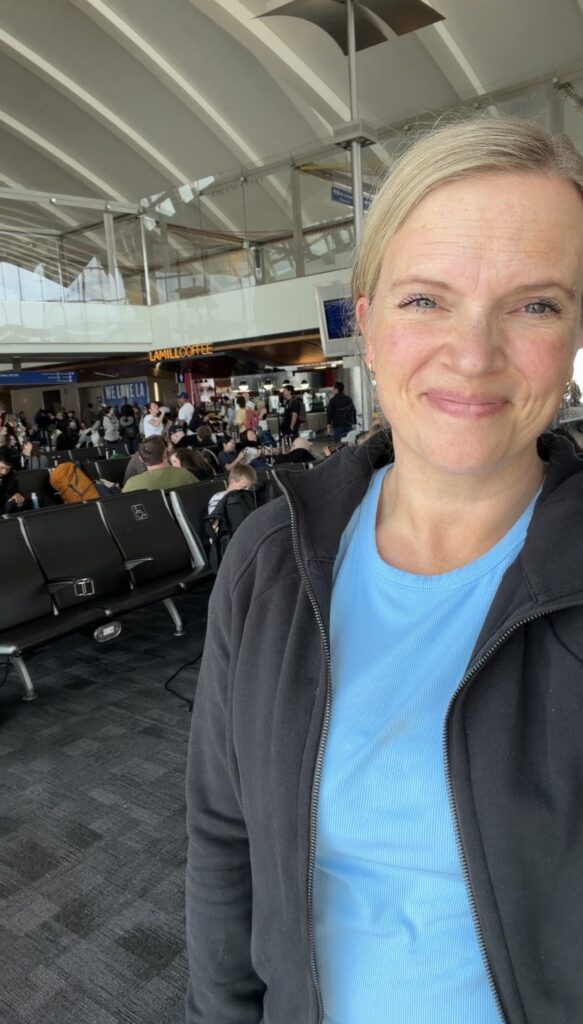
We woke the kids up and headed to the airport. The TSA lines were INSANE; even TSA PreCheck was packed. Luckily, we hold a card that gets us Clear+, so we breezed through.
Here’s a few cards I love that give you Clear+ credit HERE and HERE.
Our flight from LAX was delayed, so we took the kids to Gameway, an airport gaming lounge. Gameway lounges are premium video game lounges located exclusively inside many major United States airports. They are typically equipped with high-end PCs, PlayStation and Xbox consoles, and 4K screens. As cardholders, the cardholder plus two guests get in free. You pick one snack, one drink, and get to play Xbox, PlayStation, or a Gaming PC for an hour. My husband and I went old school on the 1980s NES controllers.
Helpful hit: the top card HERE got us into Gameway, but read about other cards great for lounge access HERE.
Day 1: Arriving in Tokyo
We pre-booked an airport transfer through Klook (basically an Asia-focused version of Viator/GetYourGuide). It was the best decision we made; our brains were functioning at maybe 25% after that flight. We dropped our bags at the Hyatt Centric Ginza Tokyo then walked to get some dinner before bed.
Here’s my list of cards that will help you with points for this hotel.
The hotel provided complimentary umbrellas, and we waited for about 40 minutes for ramen in the rain. I remember thinking there is NO WAY this is going to be worth it. I was very wrong. Ginza Kagari Honten was delicious. It won a MIchelin Bib Gourmand award, so it has to be! Our favorites were the ramen with soy and the truffle ramen.
TRM tip: Jet lag in Japan is actually awesome. Naturally waking up at 4–5 AM is amazing for beating the crowds. Just keep in mind, you crash hard in the afternoon/evening. Avoid late reservations at all costs.
Getting Around with Tokyo Trains and Subways
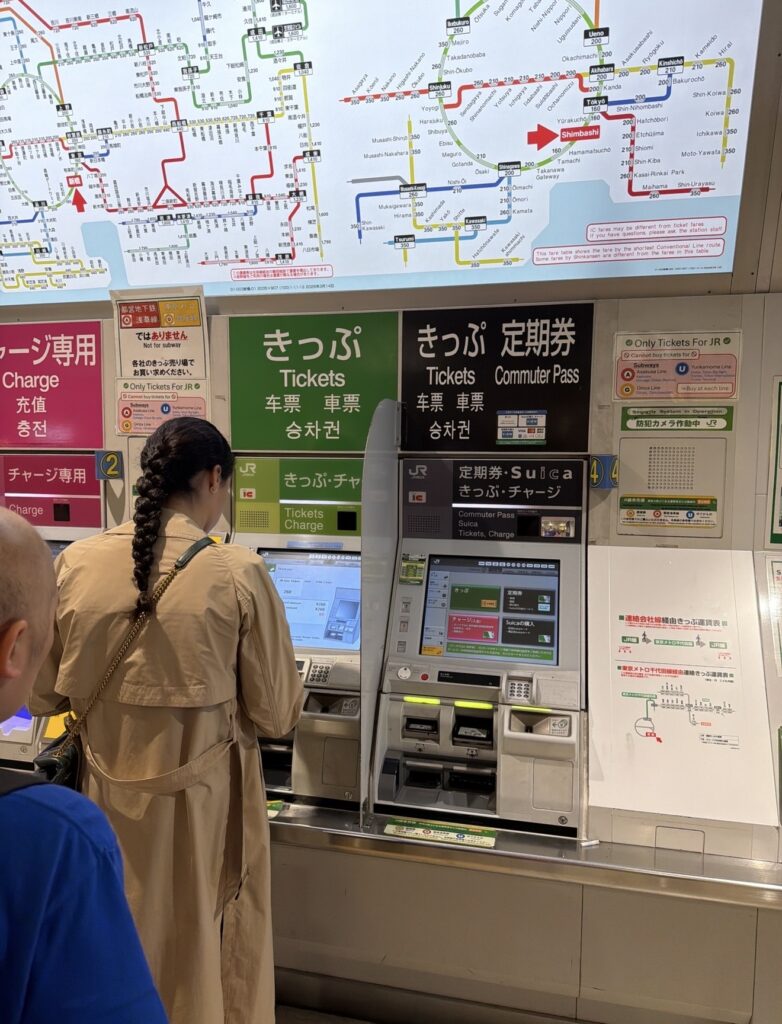
Before you panic about the train system and how to get around, here’s what you need to know.
Almost everything is in English: signs, stations, ticket machines, announcements, and Google Maps. There are two main systems: JR (trains) and Metro (subway). Different companies sometimes use different ticket machines and gates. It sounds more complicated than it is. You just need to look at the map above the ticket machine and match it to where Google Maps shows you to go.
Google Maps does basically everything: what line, what platform, what exit, what time, even the best train car sometimes. You do NOT need to memorize the system. The lines are color and letter coded.
If you buy a Suica card, you can tap in and tap out. If you don’t, keep your ticket to get both in and out of the station. Kid Suica cards are half price but only available at specific stations (JR train lines can be long). Plan for extra time to navigate the train system for your first day. The system is way less intimidating once you’ve done it once.
Day 2: Asakusa, Fish Market, & Shibuya
Knowing we would be tired the first day, we hired a guide to take us around Tokyo. We used @wanderjapanwithshoko, and she sent us a questionnaire prior to our visit to find out our interests.
We met her at Asakusa, which is one of Tokyo’s most historic and traditional neighborhoods. It’s often popular for first-time visitors to visit “classic” Tokyo.
At the center of Asakusa is Sensō-ji, Tokyo’s oldest and most famous Buddhist temple.
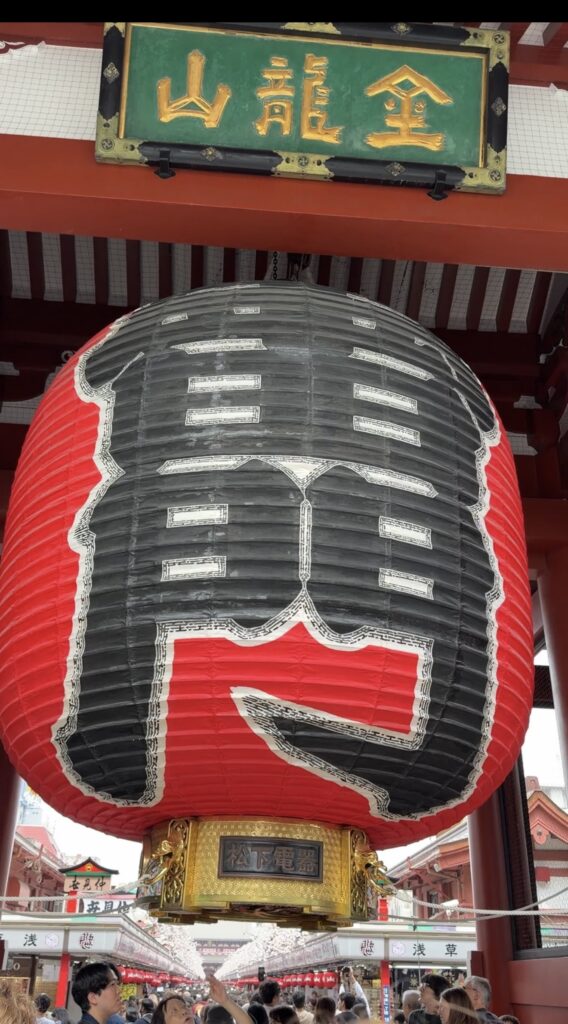
The giant red lantern at the entrance to Sensō-ji Temple is one of the most iconic symbols of Tokyo. Hanging from the famous Kaminarimon, or “Thunder Gate,” the massive lantern welcomes visitors into the Asakusa district and marks the beginning of the Nakamise shopping street. Covered in Japanese characters, the lantern is not only a popular photo spot but also a symbol of protection and good fortune for those visiting the temple.
You can also receive fortunes for luck, cleansing water rituals, and incense waved toward your body for good health. I got a bad fortune, so I tied it to the rack at the temple to leave the bad luck behind. The priests burn them later, and the smoke from the burning carries the bad luck away.
We then walked 15 minutes to Tsukiji Fish Market for breakfast. This is one of Tokyo’s most famous wholesale fish markets. It has sushi restaurants, seafood skewers, Wagyu beef bites, and other shops. Go in the morning for the liveliest atmosphere; most shops close by the afternoon. It’s so fun to casually food hop and try lots of things. I loved the scallops. The kids loved the grilled tuna. Everyone loved the crab and hated the octopus.
For lunch, we tried conveyor belt sushi at Kura Sushi. We love sushi, but this was a miss for us. We’ve honestly had better sushi in Utah, which is saying something.
In the afternoon, we hit Shibuya Crossing, which has up to 3,000 people cross that intersection all at the same time. It’s widely considered the busiest pedestrian intersection in the world, located in Tokyo’s Shibuya district. It’s a “scramble crossing,” meaning all traffic stops simultaneously and pedestrians cross in every direction at once, including diagonally. It’s become one of the most photographed spots in Tokyo and a symbol of the city’s organized-chaos energy.
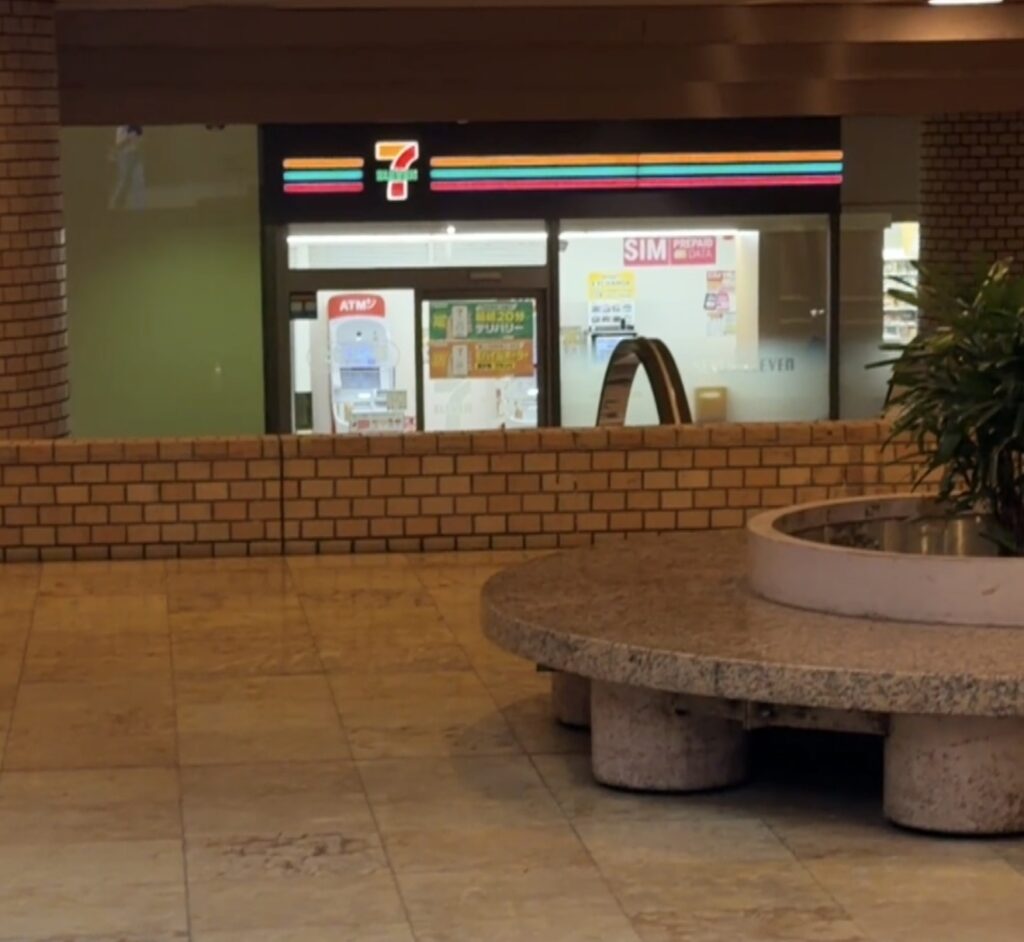
7-11
Insider Tip
Discovering 7-Eleven Japan
Japan’s 7-Eleven is nothing like the one by your house. Fresh onigiri rice balls, egg salad sandwiches with an actual cult following, hot steamed pork buns from the counter, and ATMs that work on foreign cards, which matters more than you’d think in a country that’s still heavily cash-based.
We ate 7-Eleven breakfasts and late-night snacks almost every day because it was so fun to try new things.
Our favorites:
- Fiber drink mocktail (lemon / grapefruit / grape)
- Ohayo Crème Brûlée ice cream
Day 3: teamLab + Earthquake Simulator
Before we headed out, we made a quick breakfast run to 7-Eleven and walked to Sumida Park, which had stunning cherry blossom trees and Tokyo Skytree views. It felt magical, and everyone was picnicking under the trees. It was the perfect start to the day.
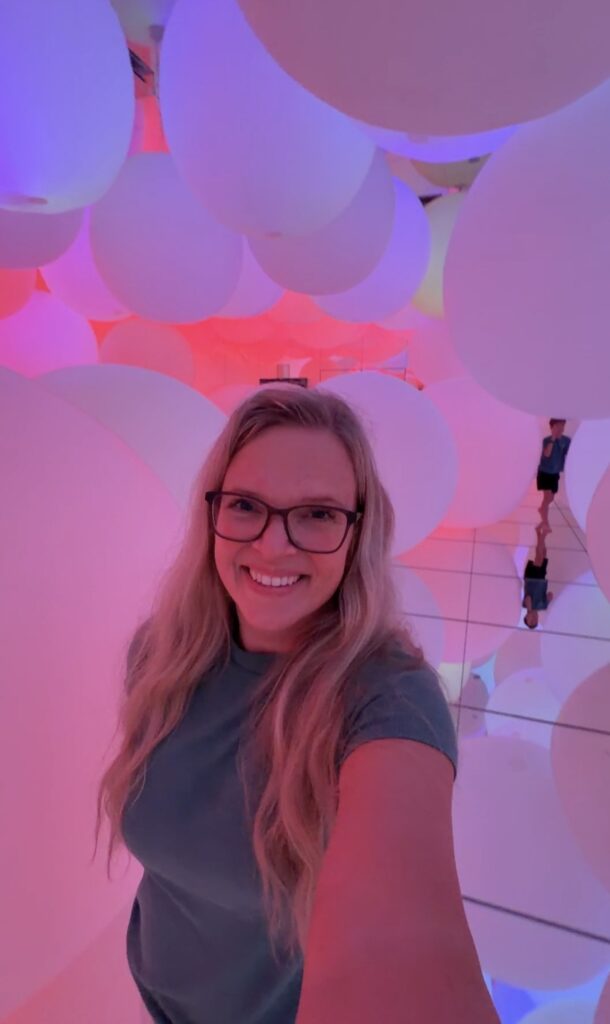
Then: teamLab Planets Tokyo. It’s an immersive digital art museum where you walk inside the art instead of just looking at it. There’s rooms of infinite mirrors, floors covered in flowing water, and projections that react to your movement. It’s barefoot, a little surreal, and genuinely unlike anything else we’ve ever done.
Important: this will sell out weeks in advance, so book before you leave home. We got the 8:30 AM slot because it gets crowded later in the day.
The highlights:
- A sparkling light tunnel you walk through
- The giant balloon room
- A kaleidoscope room that felt like you were inside a prism
- An interactive drawing room where your kids’ artwork comes to life on the walls
- A room of real hanging flowers reflected in infinite mirrors
- A colorful soft ball room
This was TOTALLY worth it, especially with kids.
Tokyo Disaster Prevention Center (本所防災館) was next.
We wanted our kids to experience what a major earthquake feels like because Utah is overdue for one. As a bonus, they also experienced a typhoon, fire, and urban flood.
Fun fact from the flood simulation: just 8 inches of flooding puts 100–150 pounds of force on a door.
Entrance is free, but a translator is required if you don’t speak Japanese. @wanderjapanwithshoko bought our tickets for us ahead of time, and met us at the center to translate for us.
Luggage Forwarding
Insider Tip
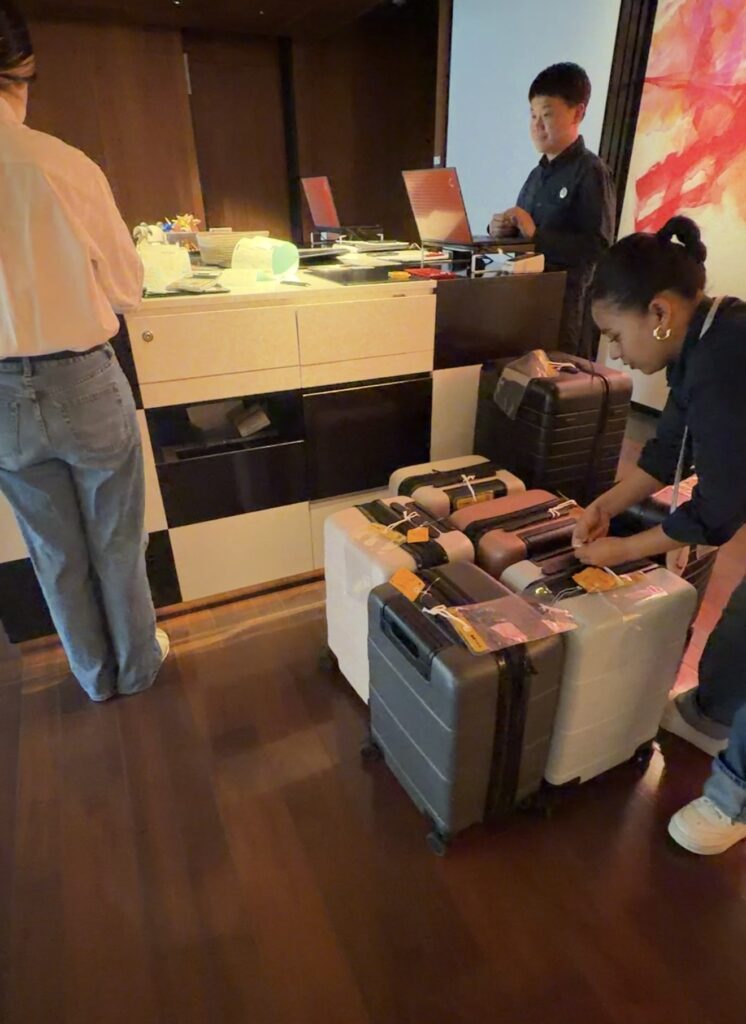
Luggage Forwarding in Japan
It’s so brilliant I wish everywhere did it. For $15–25 per suitcase, your bags are whisked to your next hotel while you explore hands-free. It’s worth every yen with kids and a busy subway system.
Ask your hotel front desk about “luggage forwarding” or “Yamato Transport”
Fill out a simple form with your next hotel’s name, address, and check-in date. The staff will help if it’s in Japanese
Pack an overnight bag since your big luggage usually arrives the next day
Arrive at your next hotel and your suitcases are magically waiting for you
Day 4: Bullet Train to Kyoto
Up early to catch the first Shinkansen (bullet train) to Kyoto. A note for first-timers: the platform signs show the final destination city, not necessarily your stop. If you don’t know the final destination city, it can be confusing when it’s not on your ticket. Match the train number and departure time instead.
The train itself is more like an airplane than a train, but without the turbulence. It travels at 180+ MPH. Kids’ faces at the window were priceless.
Upon arriving in Kyoto, we were immediately glad we didn’t have more than backpacks since there were SO MANY STAIRS.
The Hyatt Place Kyoto was incredibly close to the subway: a 10-minute direct ride from the Shinkansen station. Was the room tight? Yes. But we all had our own beds, and the location was amazing.
Again, check out this list for cards to help you with the points you need to book this hotel.
Kyoto: Nijo Castle, Samurai Museum, & Ninja Training
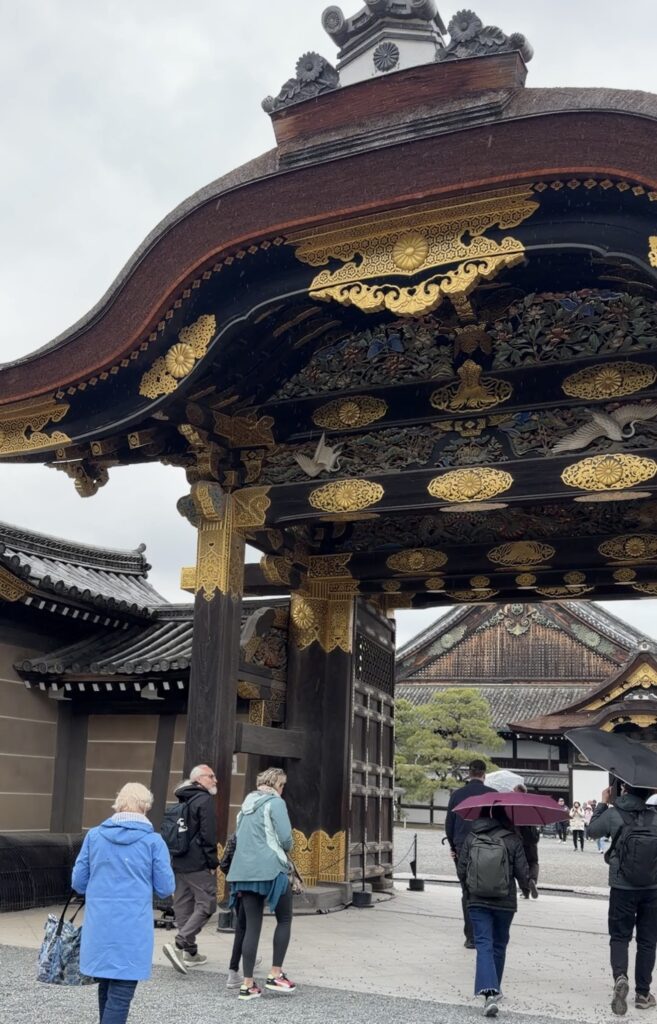
Nijo Castle in Kyoto is a 17th-century shogun’s palace, and it earns its place on the itinerary the moment you walk through the doors. The floors are engineered to chirp like birds with every step, a deliberate security feature called nightingale floors. They were built so that no one could move through the castle undetected. Not even a ninja. It was so cool and very worth it.
Next was the Samurai Ninja Museum. The guide was SO fun and high energy; I completely get why everyone with kids does this experience. You also get a little ninja experience at the end. I booked a separate ninja experience thinking it was different, but we could’ve skipped it. The museum already includes part of the same ninja experience. The additional charge just adds costumes and blow darts.
For lunch, we walked to Tarekatsu Kyoto, which I highly recommend. The katsu was incredible.
We ended the day with a ramen-making class at Ramen Factory Kyoto. We had all the kids rank their top 5 favorite things from the trip, and this made every single list. Ramen in Japan is on another level. My daughter had four bowls. Why is everything better in Japan?
Food Guide
Everything You Need to Know About Ramen
Ramen is Japan’s most beloved comfort food: a bowl of wheat noodles served in a carefully crafted broth, topped with ingredients like chashu pork, soft-boiled egg, nori, bamboo shoots, and green onion. What looks simple is anything but. A great ramen broth can simmer for 12 to 72 hours.
Japan takes ramen seriously enough that there’s an entire museum dedicated to it. Different regions have their own distinct styles, and locals will passionately defend their favorite bowl.
Soy sauce-based, clear brown broth. The classic Tokyo style.
Rich, creamy pork bone broth. Originally from Fukuoka, now famous worldwide.
Hearty and savory, born in Hokkaido to stand up to cold winters.
Salt-based, light and delicate. The oldest style of ramen in Japan.
⭐ Don’t miss: Michelin Bib Gourmand Vegan Ramen
Do yourself a favor and don’t leave without trying it. A Michelin Bib Gourmand designation means “really good food at a reasonable price,” and this one earns it.
Pro tip: slurping is not rude in Japan. It’s actually a compliment to the chef and helps cool the noodles as you eat.
Day 5: Gion, Arashiyama, the Golden Pavilion and More
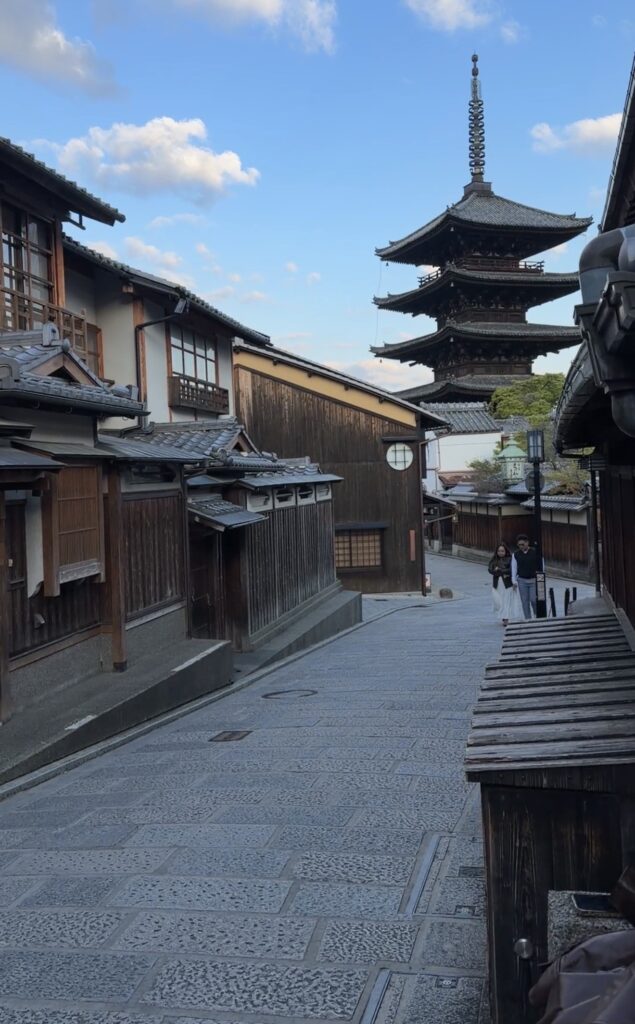
We started the morning with pics in Gion with Anna @babybumps_photography, and we loved her. Ever since we went to Kauai, we decided we are doing family pics on vacation every year. Our pics are always amazing now, and none of this would be possible without points. What a better souvenier than pics with the people you love the most?
The Arashiyama Bamboo Grove is one of the most photographed spots in Japan. If you want to do it, do it first. It was so crowded when we went, so we really weren’t sure that it was worth it. It’s pretty but short. I would put this in your “if you have time” category.
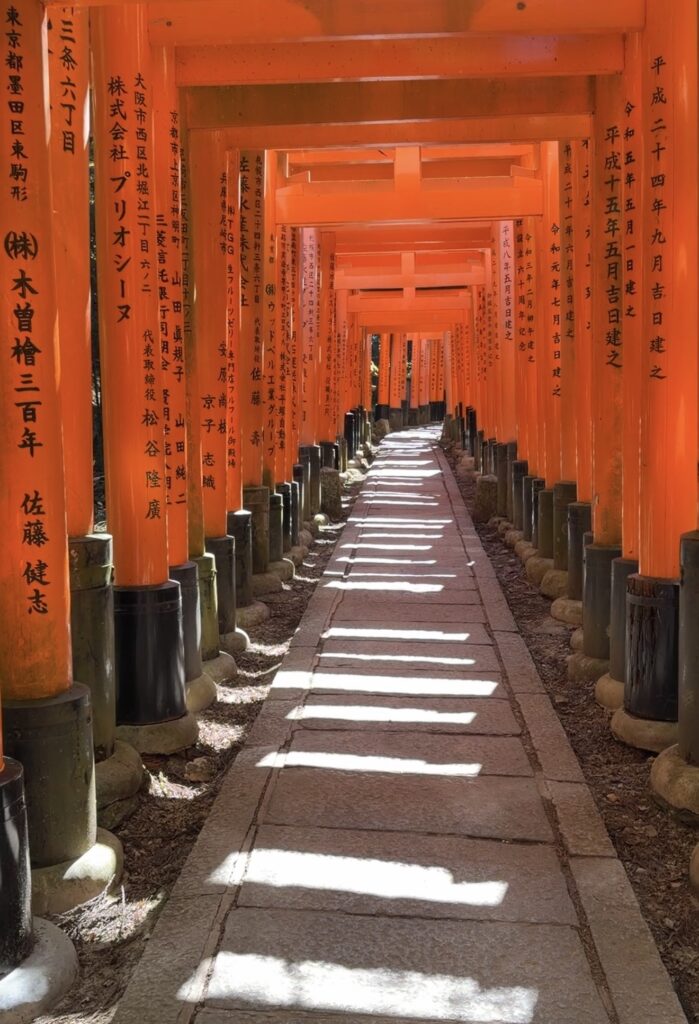
Of everything we did in Japan, the hike through Fushimi Inari Taisha in Kyoto was one of my very favorites. Thousands of brilliant orange-red torii gates line the mountain trails, donated over centuries by families and businesses praying for good fortune. It was one of those rare travel moments that looks exactly like the photos but somehow feels even better in person. If you do nothing else in Kyoto, do this.
Kinkaku-ji, the famous Golden Pavilion, is one of those bucket-list spots that shows up on every Japan highlight reel, and we made the trip out to see it. Honest review? It didn’t quite live up to the hype for us. The temple itself is genuinely pretty, and the reflection on the pond is postcard-perfect, but once we got there, it felt a little flat. The crowds were thick, the visit is very much a walk-by-and-look experience rather than something you can really explore, and more than one of us made the same observation: it kind of just looks like it was painted gold. If you’re nearby it’s worth a quick stop, but we wouldn’t go out of our way for it again, especially not after Fushimi Inari set such a high bar.
We ended the day back in Gion once everything was open for the evening. It was much more packed and a completely different vibe than our quiet early-morning family photos.
The Kiyomizu-dera temple was worth going back and seeing. We ended the night with Wagyu steak for dinner, followed by the most amazing white peach soft serve ice cream. It came with a tiny blue flower on top. Why is everything cuter in Japan? If you want to find it yourself, the address is 2 Chome-226 Kiyomizu, Higashiyama Ward, Kyoto.
Japan travel guide
Religion & shrines at a glance
Japan has two main religions and they coexist so naturally that most visitors don’t realize they’re moving between them. Knowing the difference makes every temple and shrine visit richer.
Shinto shrines
Japan’s indigenous religion. Shrines honor kami, spirits found in nature, ancestors, and places. Look for the iconic torii gate at the entrance.
Rinse your hands at the temizuya (water pavilion) before entering. At the main hall: bow twice, clap twice, bow once. It’s a purification ritual, not optional decor.
Buddhist temples
Buddhism arrived from China via Korea in the 6th century. Look for Buddha statues, pagodas, and a large ornate gate with guardian statues called Niō.
Temples usually have a large incense burner out front. Wafting the smoke over yourself is considered purifying and is completely encouraged.
Good to know
Paper fortune slips sold at both shrines and temples. If yours is bad luck, tie it to a rack nearby to leave it behind.
Most Japanese practice both religions. Shinto for births and weddings, Buddhist rites for funerals. Many sites blend both traditions and that’s completely intentional.
Speak quietly, don’t point at altars, and always ask before photographing inside. Admission is free at most shrines. Temples sometimes charge a small entry fee.
Day 6: Shinkansen to Hiroshima
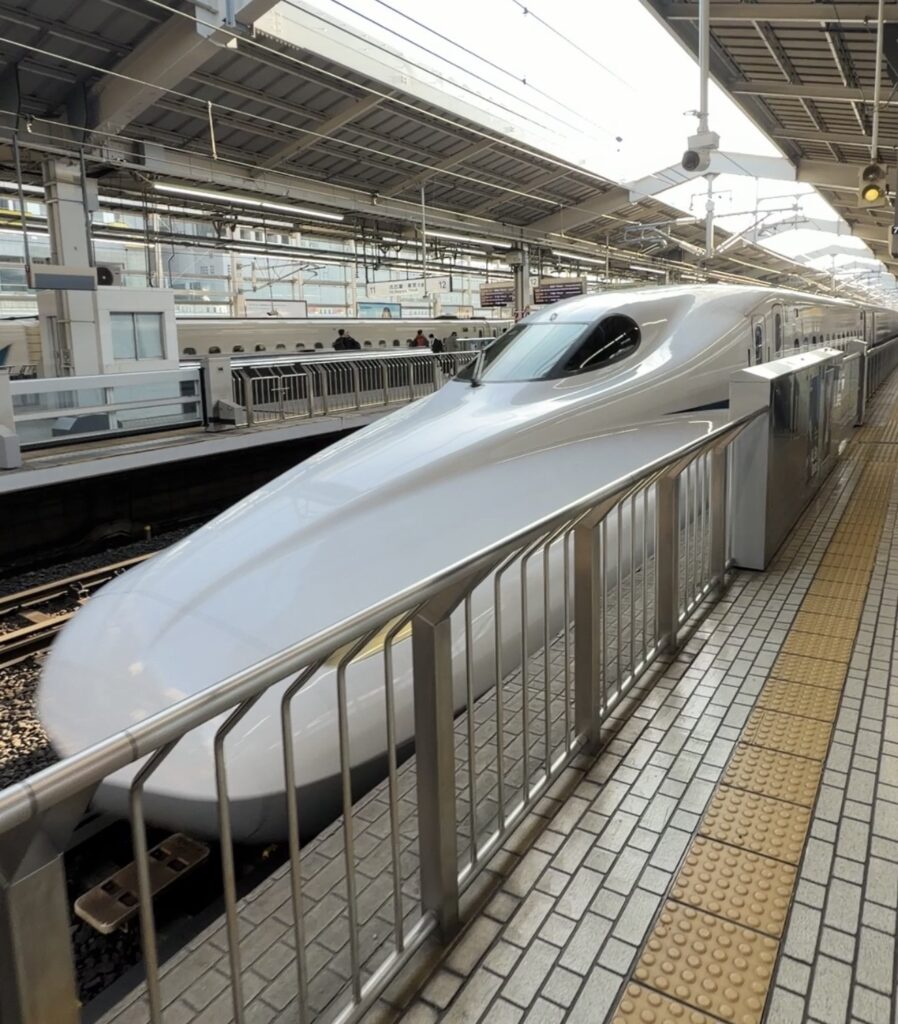
We took the bullet train to Hiroshima for a day trip and forwarded our luggage ahead to the Disney hotel so we didn’t have to haul it on the train. Kyoto to Hiroshima is 236 miles or about 1 hour and 37 minutes by train.
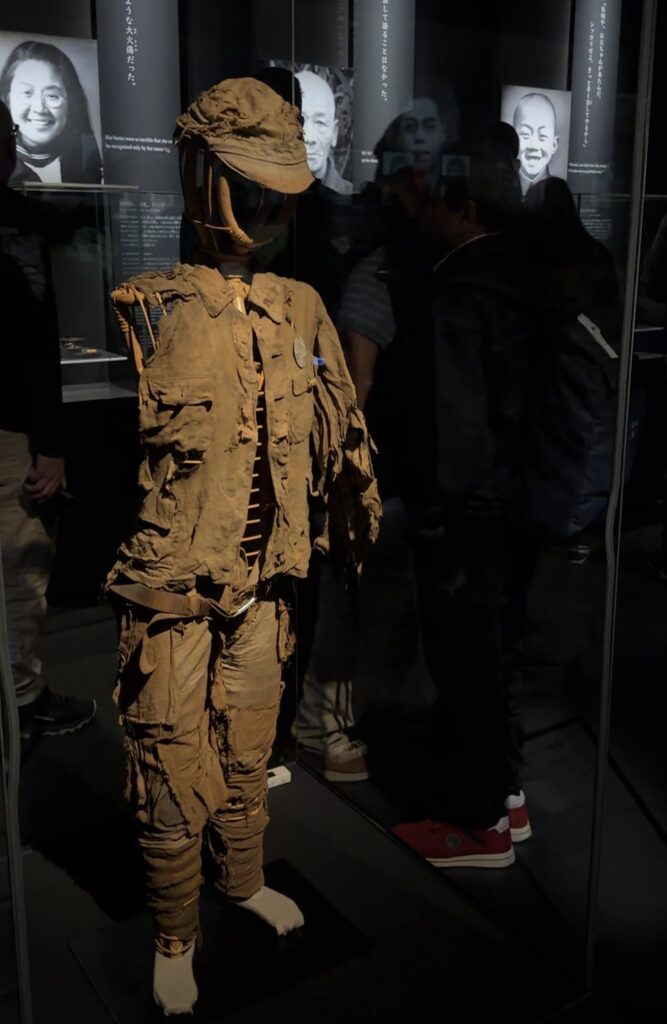
We almost skipped Hiroshima, and I’m really glad we didn’t. We packed all of Kyoto into one day so we could fit in this Hiroshima/Miyajima day trip after two friends who had lived in Japan told us it was a must-do. I wasn’t thrilled about getting back on another train, but we decided to go to the Peace Museum. I worried it might feel boring to my kids (who constantly claim they hate sightseeing), but this ended up being totally worth it. This day landed in both mine and my husband’s top five favorite parts of the entire trip.
We grabbed the audio tours, which helped a ton. It led to some really good conversations about war, suffering, and why it’s called the Peace Museum. It was way more impactful for our family than I expected, given our kids’ ages.
One of the only buildings left standing near the hypocenter isn’t part of the museum, but it’s about a five-minute walk away. Next to it is a large Peace Bell you can ring. The bell is a symbol of peace and a world free of nuclear weapons. Anyone can ring it as they walk through the park.
For lunch, we walked to Nagataya, one of Hiroshima’s most beloved okonomiyaki restaurants, just a short walk from the Peace Bell. Okonomiyaki is a savory Japanese pancake loaded with cabbage, your choice of meat or seafood, and topped with a sweet-savory sauce, Japanese mayo, and bonito flakes. It was so good. There was a huge line out the door by the time we left.
Miyajima
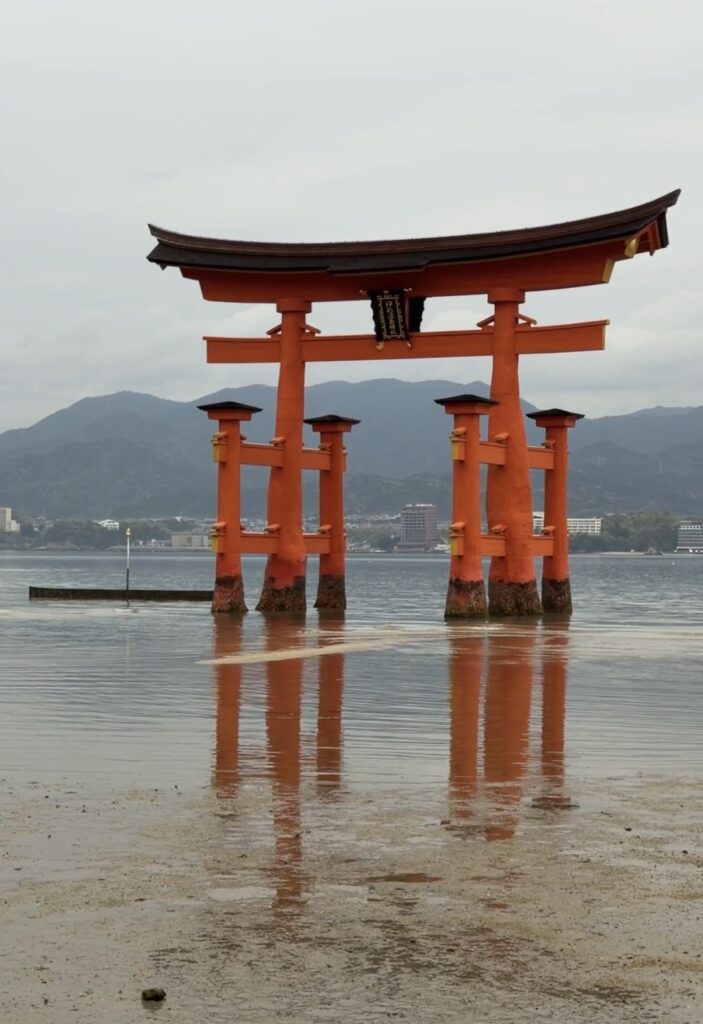
Next we caught the ferry to Miyajima. It was super easy, kind of like taking the subway, and the ride is only about 10 minutes. The island has roaming deer everywhere. They are considered sacred in Japanese culture and are completely unbothered by people, so the kids were obsessed.
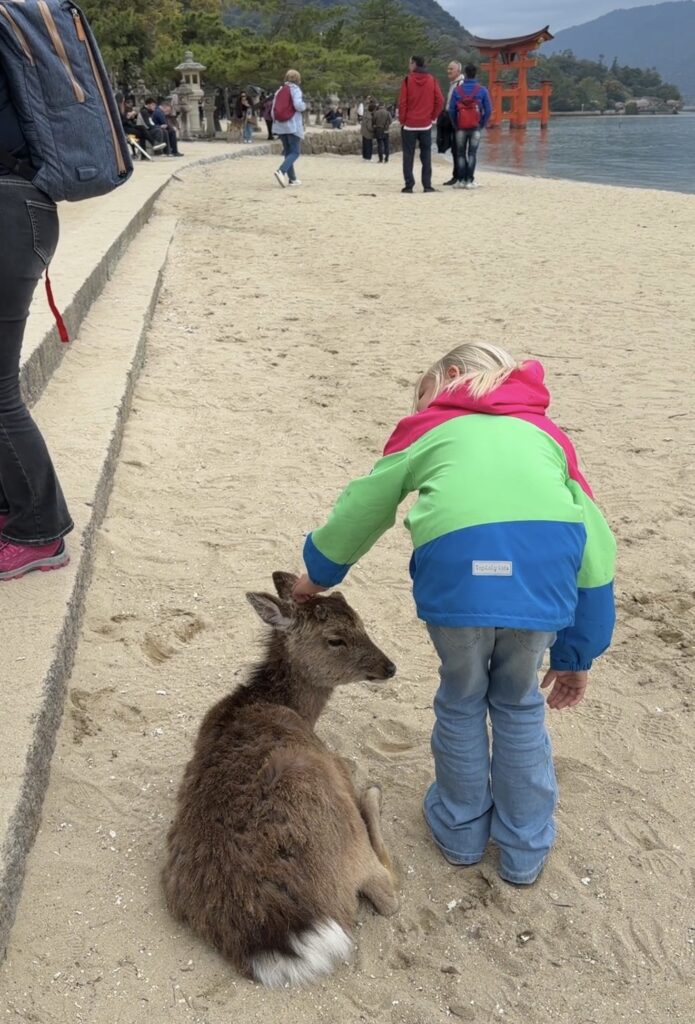
There are signs that read: “They are herb-eating animals, but they may eat your personal belongings, such as tickets or souvenirs.” We personally witnessed one stealing a sandwich straight out of a woman’s hand, wrapper and all.
We passed the iconic floating torii gate on the way to the ropeway. The Miyajima ropeway was stunning. Even in the rain it was peaceful and gorgeous. There are hikes at the top, but we ran out of time. By the time we came back down, the tide had gone out from the red gate, which I wish we’d timed better. I also wish we’d stayed the night on the island. We absolutely loved it.
If at this point in a trip you feel that your bank account is tightening, here’s a list of cash back cards that will literally give you cash back for spending, making the trip that much more affordable, especially when you are buying Tokyo Disney tickets!
Did You Know
Why is Japan so clean?
Japanese schools have no janitors. Instead, there’s a dedicated 40-minute cleaning period each day where students tidy up themselves. It’s rooted in the Buddhist concept that cleaning is a form of discipline and mindfulness, not just a chore.
The Japanese term soji captures the idea of purifying both the space and yourself. By cleaning the spaces they use every day, students develop respect for shared spaces, a sense of community responsibility, and the understanding that no task is beneath anyone.
The country is immaculately clean despite having almost no public trash cans
Salary workers clean their own office common areas in the same spirit
Students serve school lunch to their classmates — no cafeteria staff needed
That ethic isn’t accidental. It’s taught from age six, every single day, in the most literal way possible.
Day 7: Travel Day to Get Ready for Disney!
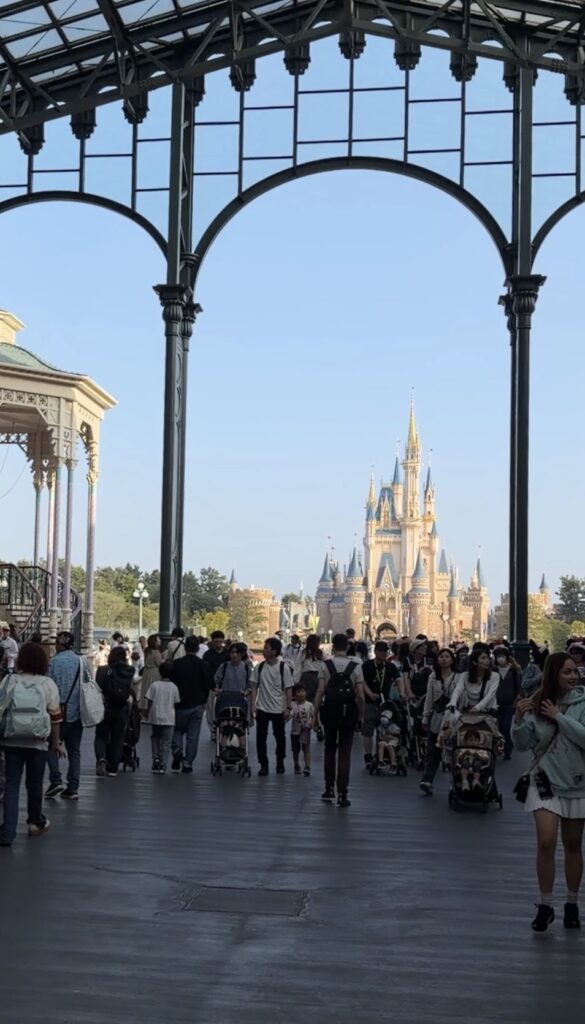
Tokyo Disney: What You Need to Know
Tokyo Disney needs a PhD to understand. The parks use Disney characters and attractions, but they’re operated by a Japanese company, not Disney. Because of that, some things are way better and some are completely different.
There are two separate parks with no park hopper option on most days:
- Tokyo Disneyland: Classic Disney with a few unique rides
- Tokyo DisneySea: Ocean-themed and widely considered one of the best theme parks on earth
Fantasy Springs is the newest area of DisneySea, featuring Frozen, Tangled, and Peter Pan. Anyone can walk in, but expect 90+ minute waits. These are the hardest rides to get on in either park.
Line options in the app:
- Priority Pass (free): Skip the line
- Premier Access (paid): Skip the line
- Standby Pass (free): Permission to get in line when crowds are especially heavy
Every ride has different rules, so check the app before you go.
The Vacation Package
So what’s the vacation package?
It’s Disney’s bundle: hotel, park tickets, ride access, and restaurant reservations all handled before you arrive. Ours was the “Enjoy Lots of Attractions” package, which included 3 pre-booked rides per park per person, breakfast, early entry, a popcorn voucher, and a merchandise voucher. There’s also an unlimited ride package, but it sells out first.
The price varies based on the hotel you choose. The biggest draw for us was the guaranteed ride access, keeping our group together, and not being glued to our phones all day.
A few things to know before you book: the total price doesn’t appear until you’ve made every single selection, so have all your choices ready before you start or you’ll lose your spot mid-booking. Lunch and dinner are add-ons. They are sit-down, prix-fixe meals with no substitutions that can easily eat up 60–90 minutes of your park day. Breakfast is not optional. If I did it again, I’d skip the other meals and do quick service. The food tends to be very different for most Western palates (think: beef tongue in clear gelatin).
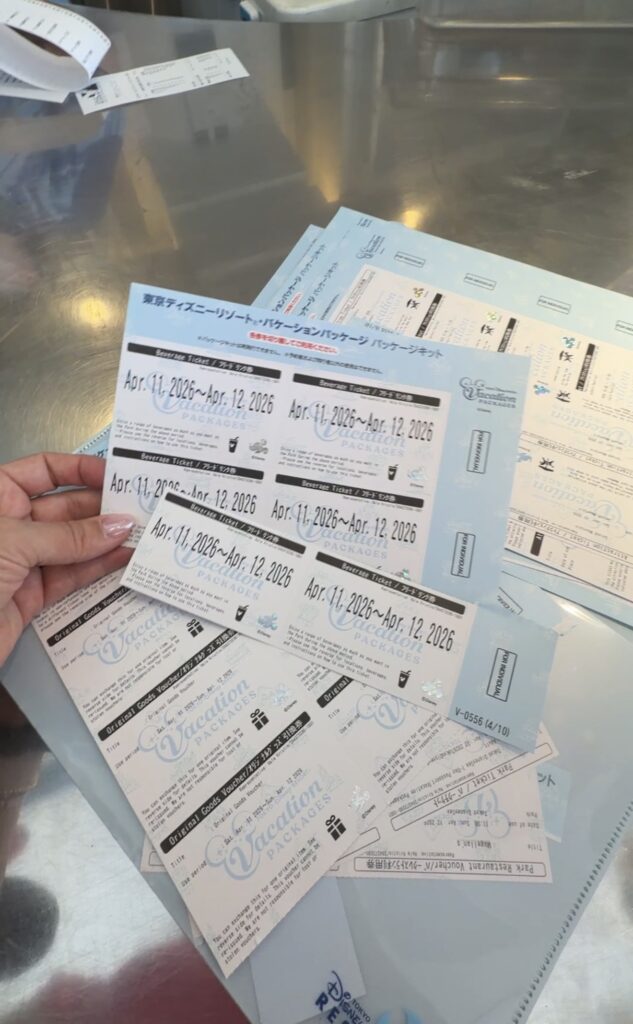
Your ride reservations come as individual tickets. There’s a lot of them, one per person, per ride, per time window. The night before you enter the park, link all of them in the Tokyo Disney app. Skip this step and your reservations may not show up at the ride.
Tokyo Disney Hotels
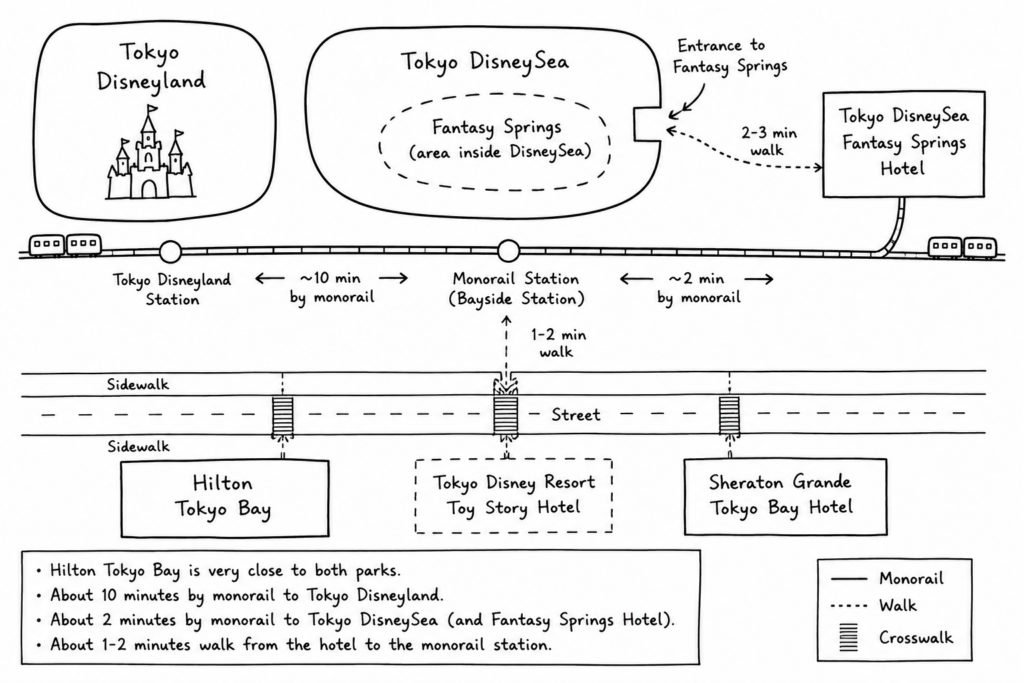
I had three hotels I wanted to try right by Tokyo Disney and couldn’t decide, so we stayed at all three: Hilton Tokyo Bay, Fantasy Springs Hotel, and Sheraton Grande Tokyo Bay. They’re all next to each other, very close to the monorail and the parks.
Hilton Tokyo Bay
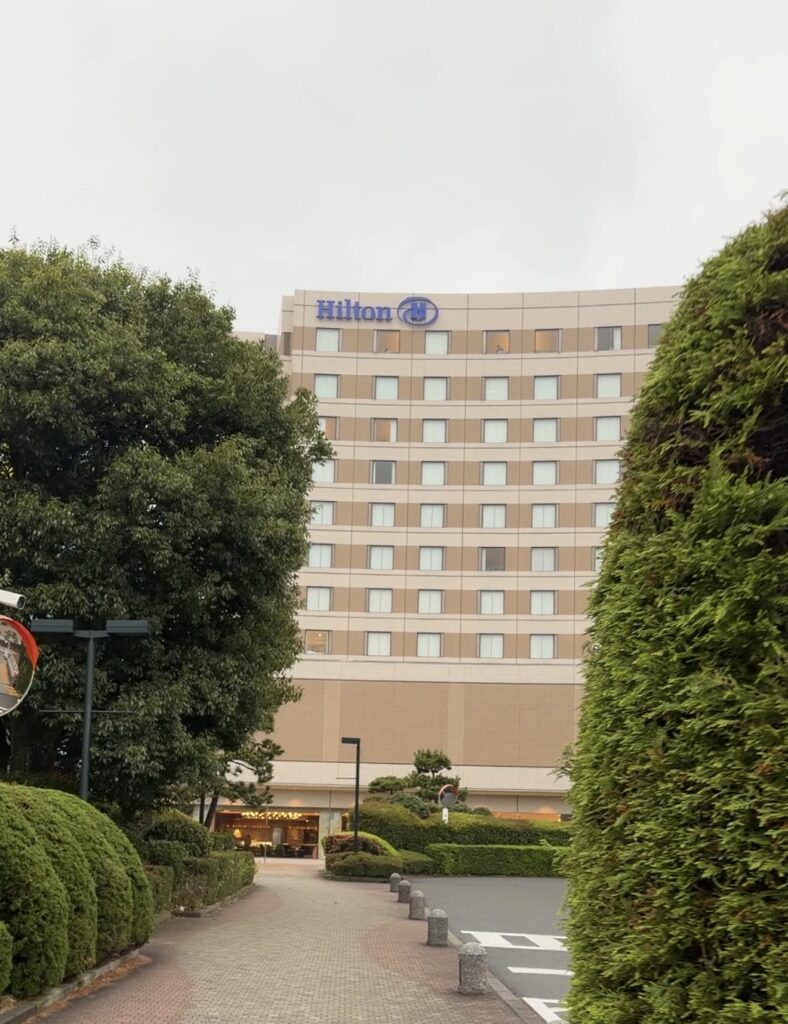
Our first stop was the Hilton Tokyo Bay. I could have used 78k Hilton points or transferred 39k Amex points (you get 2 Hilton points for every 1 Amex point), but the room was only about $212 cash and my Hilton card gave me a $50 credit, so I paid out of pocket.
If you need Amex points, check these out in order: ONE, TWO, THREE.
This hotel felt enormous after the downtown hotels we stayed in.
Food Guide
Japan’s buffets are on a whole other level
If you’ve ever been underwhelmed by a hotel breakfast buffet at home, Japan will completely reset your expectations. Japanese buffets — called baikingu — are abundant, meticulously presented, and genuinely delicious. We’re talking dozens of dishes spanning multiple cuisines, all at once, all fresh.
It’s not unusual to find sushi, ramen, curry, tempura, miso soup, fresh sashimi, and a full dessert spread all under one roof — alongside an entire Western breakfast section for the kids. The variety is staggering, and the quality holds up across all of it.
Expect miso soup, grilled fish, tamagoyaki (rolled egg), rice, pickles, fresh fruit, pastries, and made-to-order eggs. Often all at the same time.
Full spreads of hot dishes, live stations, sushi, noodles, and elaborate dessert sections that can include soft serve, crepes, and seasonal flavors like sakura or matcha.
Everything is labeled, well-stocked, and presented beautifully. Lines move quickly. Staff are attentive. Little wheeled carts for your tray so you don’t have to make five trips.
If a hotel buffet dinner is on the itinerary, don’t skip it to save money. In Japan, it’s genuinely worth the splurge — it was one of our top five meals of the entire trip.
Day 8: Disney Day 1
Up early for Disney!
Breakfast was free for two people per room thanks to Hilton status through our cards. We headed over to the Fantasy Springs Hotel to drop our bags before Disneyland. We didn’t need to forward luggage this time since it was right across the street. The Fantasy Springs hotel was stunning. There’s no early entry to Disneyland on check-in day, so we took the monorail like everyone else. You’ll need your Suica card for it, just like the subway.
Fantasy Springs Hotel
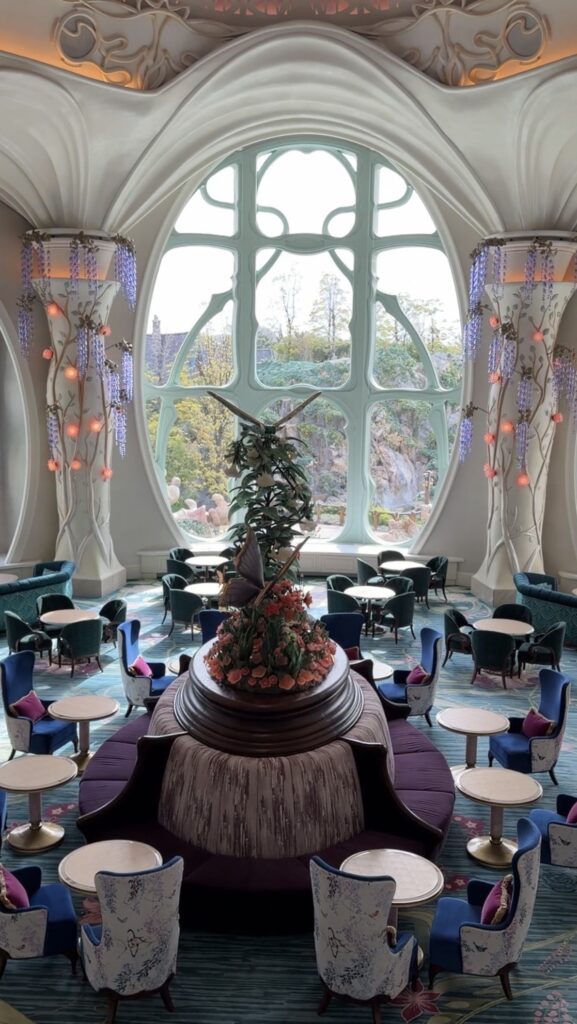
The Fantasy Springs section of DisneySea sits at the very back of the park and connects directly to the newest, most popular area. You can’t even enter the hotel without a card showing proof of stay, and the first impression is stunning.
Even with early entry, guests coming through the main gate still have a 10–15 minute walk to get there. The Fantasy Springs Hotel has its own private entrance directly into Fantasy Springs, so while everyone else is rushing across the park at rope drop, you’re already there.
If the Unlimited Rides package is available when you book, this advantage matters a little less, but for us it was huge. Vacation packages are released in monthly batches about 5–6 months in advance. Set a reminder and book the day your month opens.
One more logistics note: if you book one hotel night, you get two park days. Check-in day is Park 1 then you get another day on check-out day for Park 2.
If it fits your schedule, I highly recommend the dinner buffet at the Fantasy Springs Hotel. It’s a splurge, but worth every bit of it. It was one of my top five meals in all of Japan.
Tokyo Disneyland
The crowds were enormous and a little overwhelming, but we were prepared. One thing that helps: Japan is incredibly efficient with lines.
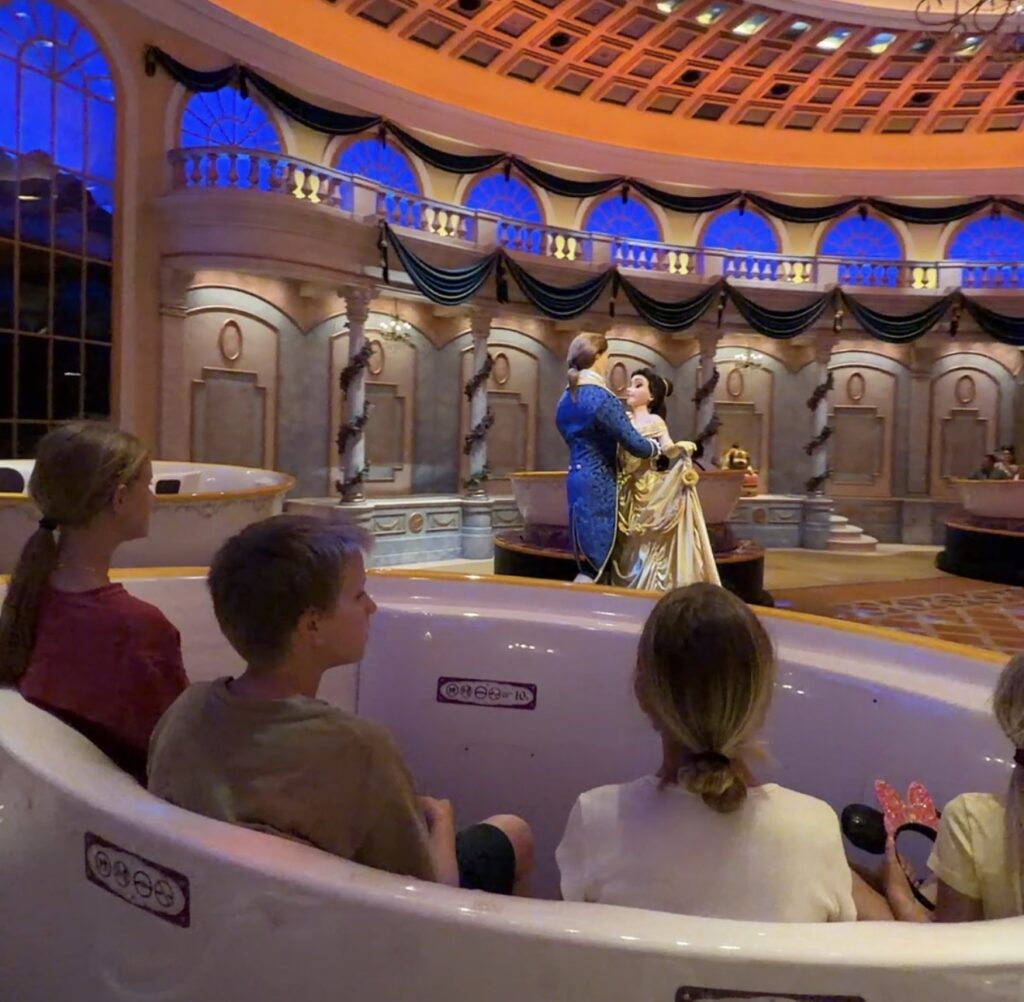
Skip-the-Line Ride 1: Beauty and the Beast The castle at this entrance is apparently 21 feet taller than Cinderella’s Castle at Disneyland. It’s a trackless ride and completely charming — my favorite movie as a kid, so this one hit differently.
We had lunch at Tokyo Disneyland’s Blue Bayou. Prix-fixe with multiple courses, but eating inside Pirates of the Caribbean made it an experience worth doing once.
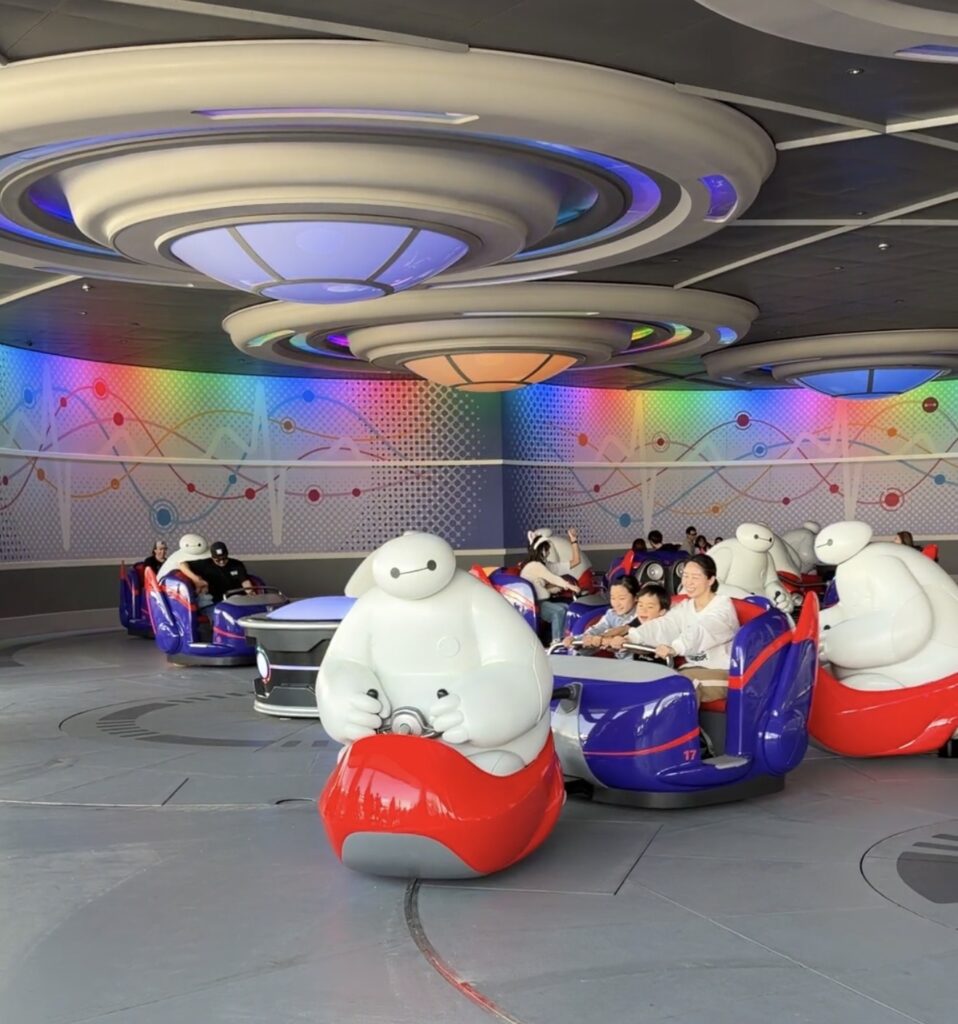
Skip-the-Line Ride 2: The Happy Ride with Baymax We chose this one because it doesn’t exist in the US. It’s a basic spinning ride, but more fun than it sounds. The Baymax music combined with the way the locals danced along in line made it super fun.
We had unlimited drink tickets, but tracking down the paper ticket for six people every single time got old fast. More drinks also means more bathroom breaks. The melon slushie was delicious, though and absolutely worth it.
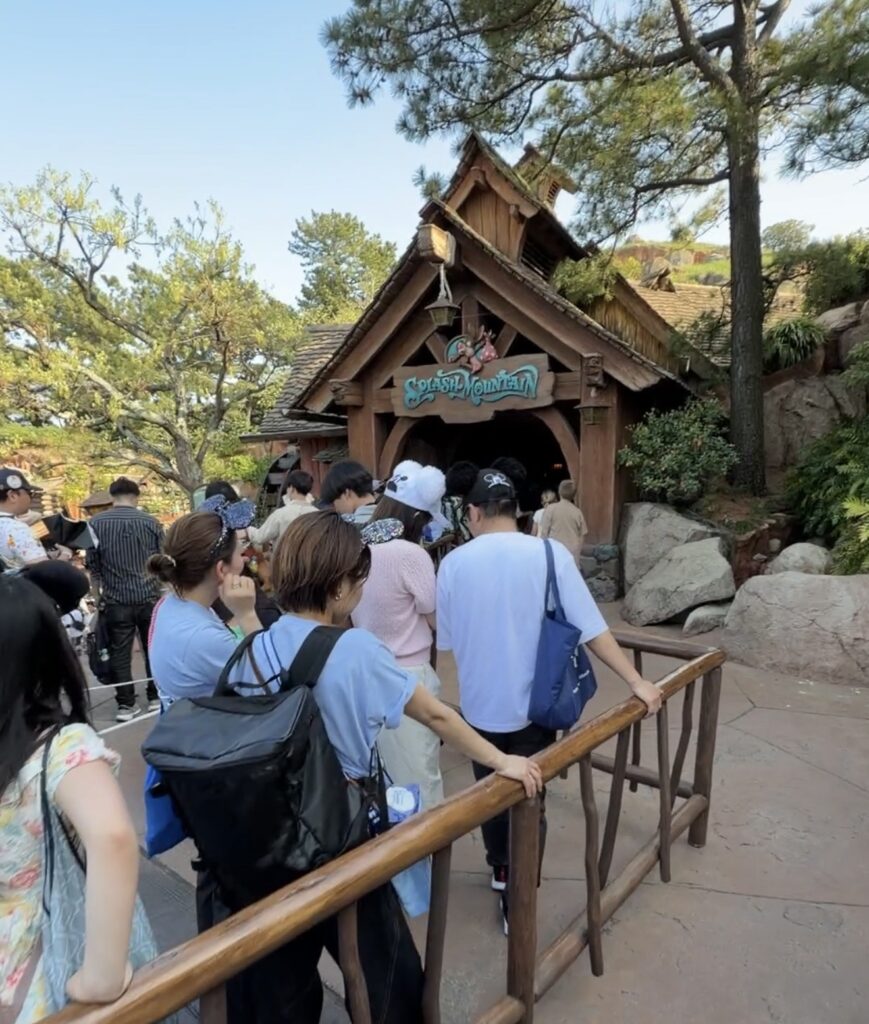
Skip-the-Line Ride 3: Splash Mountain Bigger boats, and a longer ride. We thought it was better than the versions in Orlando and California.
For dinner we headed to the Tokyo Disneyland Hotel, which is where we had the infamous beef tongue served in clear gelatin. The rides at Disneyland were well done but felt fairly similar to what you’d find in the States. The biggest difference was the atmosphere. Everyone was polite and sat down for the parade so that everyone behind them could see. It was a small thing that stuck with us.
Then back to the hotel, where all six of us somehow fit in one room!
Tokyo travel guide
Tokyo Disney: fun facts
There are two parks, and they couldn’t be more different. Tokyo Disneyland is the classic castle-and-Main-Street experience. Tokyo DisneySea is something else entirely, and many Disney fans consider it the best theme park ever built.
Tokyo Disneyland
The first Disney park outside the US, opening in 1983. It’s run by a Japanese company rather than Disney itself, which is a big reason the park is so famously spotless.
Guests regularly arrive in full Disney costumes. It’s called a “cosplay visit,” it’s completely encouraged, and it’s a whole culture unto itself.
It consistently ranks among the most attended theme parks on earth, often beating individual Walt Disney World parks in annual visitors.
Tokyo DisneySea
Widely considered the most beautiful theme park ever built, with even Disney’s own Imagineers saying so. Every port of call is built around a body of water.
It’s the only Disney park licensed to serve alcohol. Journey to the Center of the Earth is completely exclusive to this park and has a devoted cult following among Disney fans worldwide.
The Indiana Jones ride here is a completely different attraction than the one in California. Same IP, totally different experience.
Both parks are technically in Urayasu, Chiba, not Tokyo itself, similar to how Disneyland is in Anaheim and not Los Angeles. Budget a full day for each. Half a day won’t do either justice.
Day 9: DisneySea Day
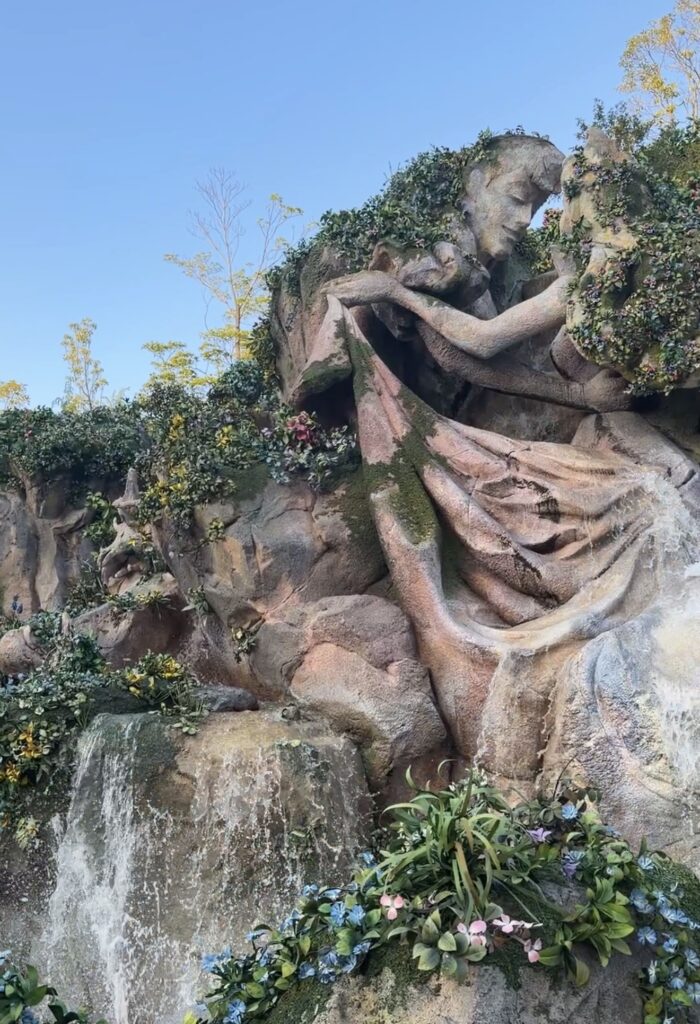
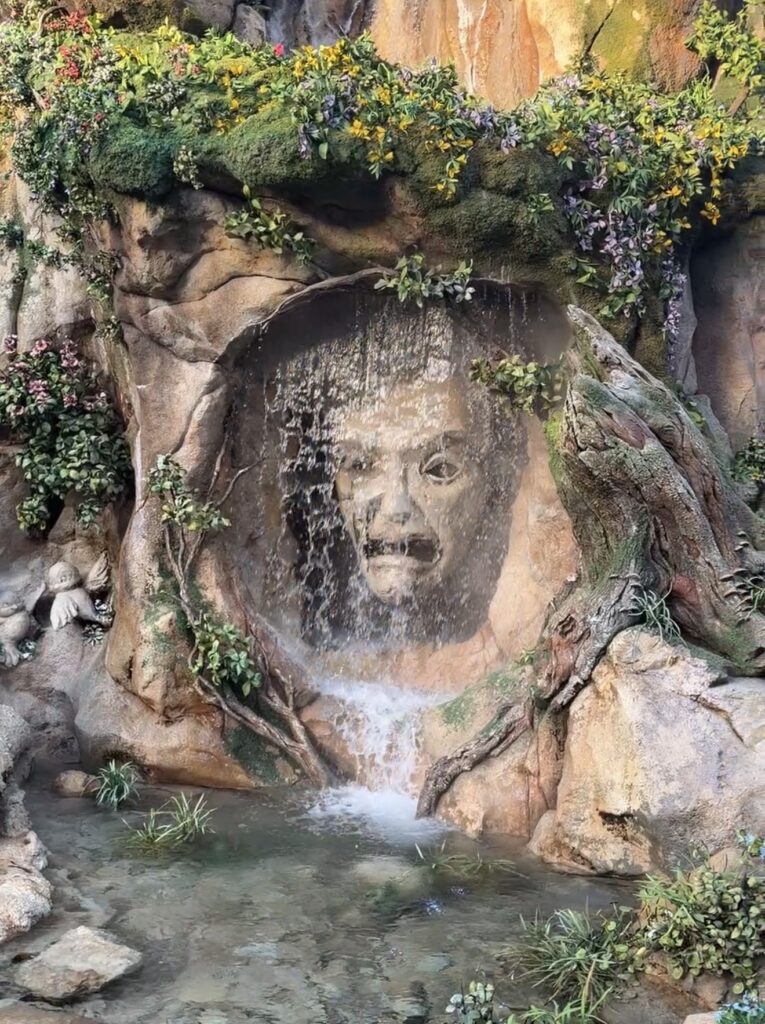
We slept in a little after a big day, which was well deserved. Today was DisneySea, and we had Happy Entry, meaning we got into the park before everyone else. One night at the Fantasy Springs Hotel felt incredibly short. We dropped our bags at breakfast, and I couldn’t help thinking: they must make a fortune on this hotel.
We ate at the Fantasy Springs restaurant, which even had Rapunzel pastries, which were ADORABLE. Then we walked directly from the hotel into the Fantasy Springs section of the park.
It. Is. Gorgeous.
Completely worth it. Even the rope-droppers coming through the main gate have a 10–15 minute walk just to reach where our entrance was. We walked straight onto two of the three most popular rides in the park before the crowds hit.
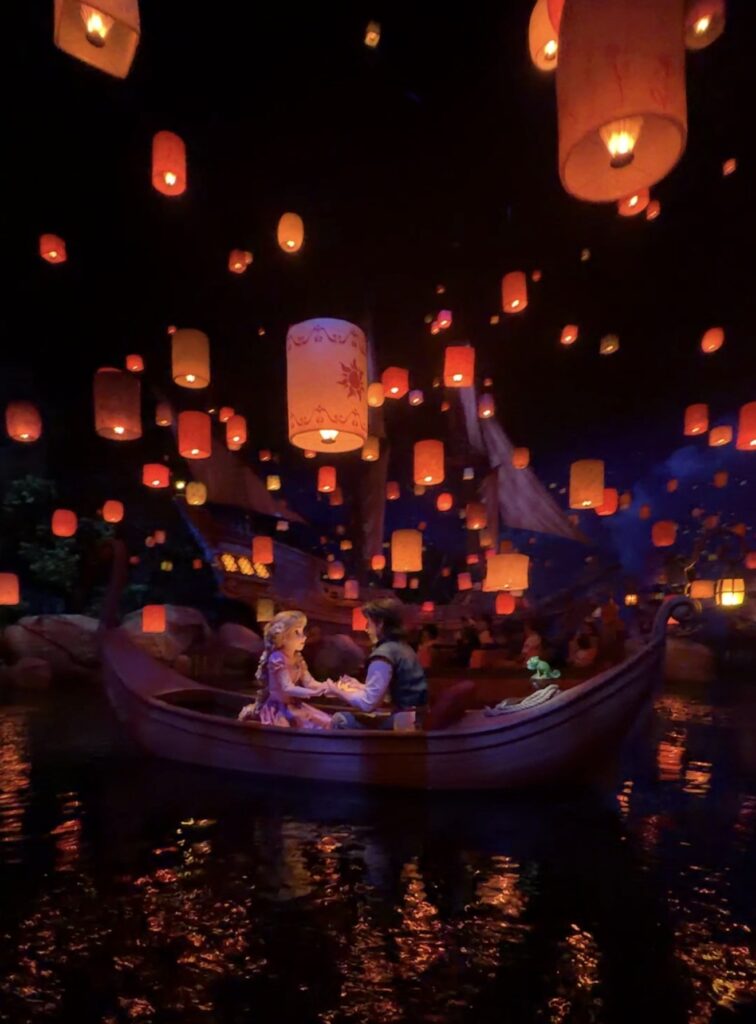
Ride 1: Tangled I thought it was absolutely beautiful. My older kids called it boring, but they basically only want roller coasters, so take that with a grain of salt.
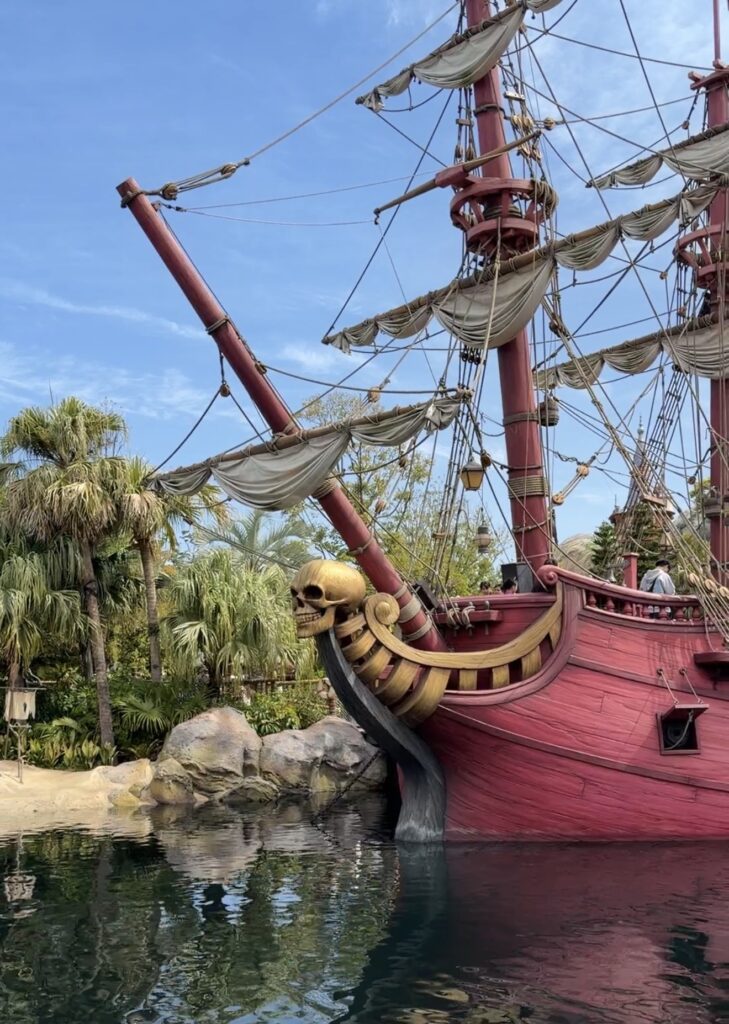
Ride 2: Peter Pan Not even a little bit the same as the version in U.S. parks. Far more digital effects and a completely different experience.
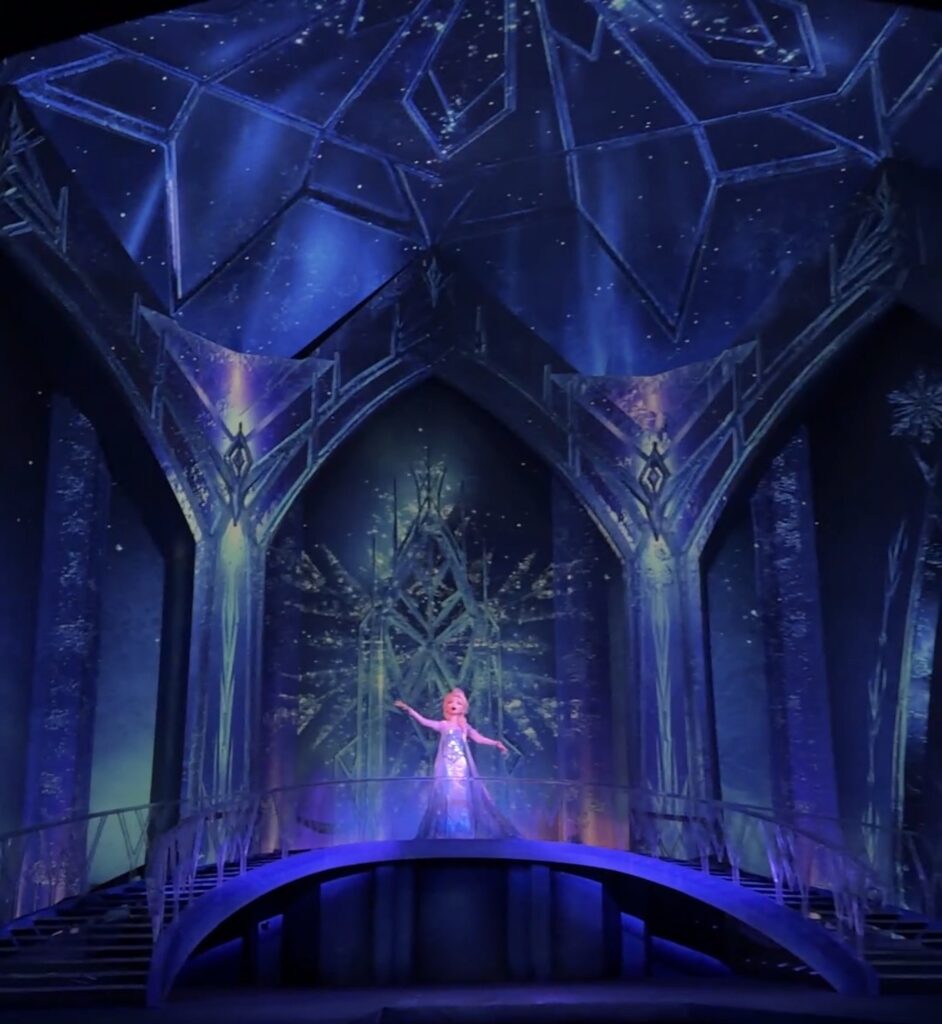
Ride 3: Frozen Our last skip-the-line ride of the day, and a must for any Frozen fan. It’s one of the longest rides Disney has ever built because it follows the entire movie, not just one scene.
On the way to lunch we walked through several of the park’s “ports,” and the theming is on another level. We felt like we were stepping straight into Agrabah, then into King Triton’s kingdom, then suddenly into what felt exactly like Venice. I was so impressed with DisneySea; it genuinely felt like a different category of theme park.
Lunch was at Magellan’s, and, you guessed it, more clear gelatin with meat in it. I desperately wished I could order off the kids’ menu, but they wouldn’t allow it. It wasn’t all bad, but it wasn’t all good either, and it ate up a full 90 minutes of our park day.
We also picked up our exclusive vacation package merchandise: cute little figurines and a bag. This was a fun bonus that comes included with the package.
We headed back to the hotel for dinner as the park closed out the day. Even with three skip-the-line passes, we couldn’t come close to doing everything. The long sit-down meals and the earlier park closing times didn’t help.
Park Tip
Don’t skip the popcorn at Tokyo Disney
This is not the popcorn cart by the exit at your local theme park. Tokyo Disneyland and DisneySea have popcorn wagons scattered throughout both parks, each selling a different flavor tied to that area of the park. The lines can get long — and they’re long for a reason.
I resisted trying them all day and finally caved. It was SO good — think savory kettle corn. Don’t make my mistake and wait.
Tokyo Disneyland flavors
Tokyo DisneySea flavors
Flavors rotate seasonally, so you may find limited-edition options depending on when you visit. Each box is around ¥400 — about $2.50 USD. Absolutely worth it.
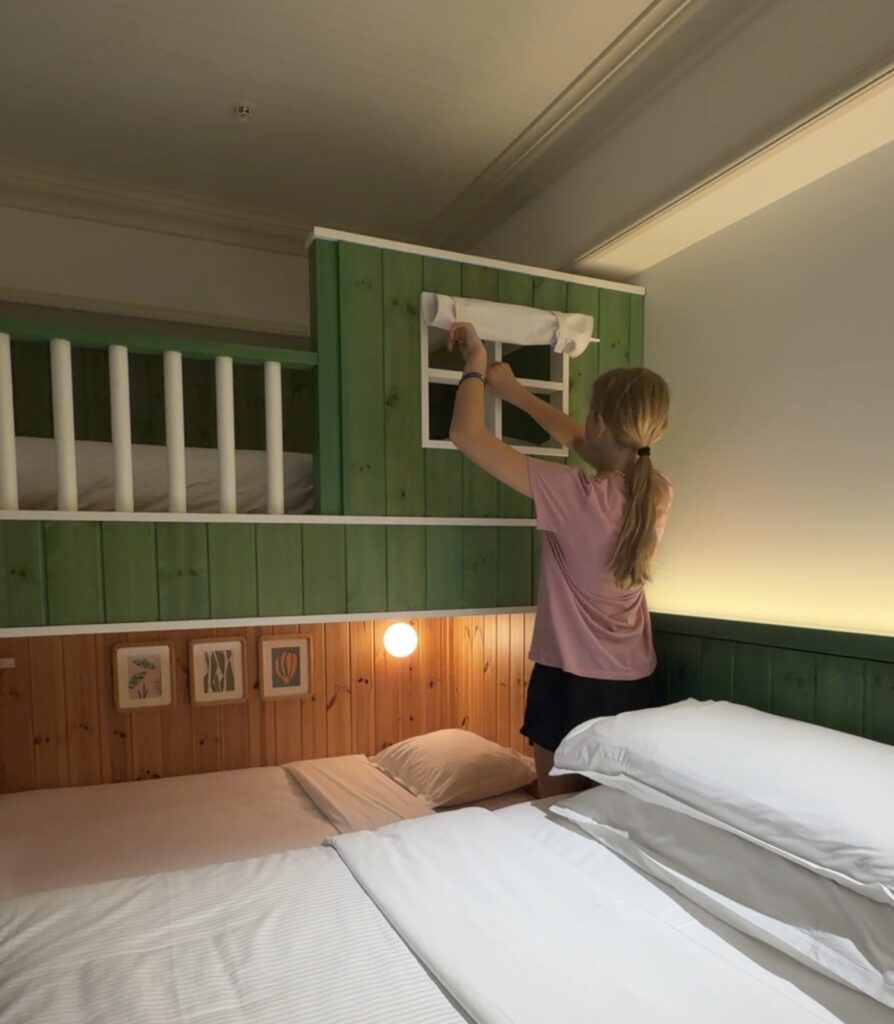
After our park day, we picked our bags up from the holding area at Fantasy Springs, then walked across the street to the Sheraton Grande Tokyo Bay Hotel, which you can book with Marriott points.
Here’s a list of cards that can help you book this hotel.
The Sheraton gave us probably the biggest hotel breakfast buffet I have ever seen in my life. Six flavors of ice cream, four kinds of noodles for ramen, grill-your-own salmon, and even a cotton candy machine, all at breakfast! Japanese buffets are on a whole other level.
Which Hotel Should You Book?
- Choose the Sheraton if you’re planning a resort or recovery day. I give it the edge on overall amenities. It’s also the better pick if your kids are going to want or need hotel downtime (pool, arcade, playground, mini golf).
- Choose the Fantasy Springs Hotel if DisneySea is the reason you came to Japan and it’s in the budget. The private entrance into the park is a game-changer.
- Choose the Hilton if you’re going rope-drop to park close and don’t need the extras. Save your money. I thought it had a slight edge with the rooms.
One note: some people choose to stay in Tokyo Bay for the entire trip because the rooms are larger and points prices are lower. Just know you’re adding 30–50 minutes of transit each way every time you want to explore the city downtown, so factor that in.
Day 10: Heading Back to Tokyo
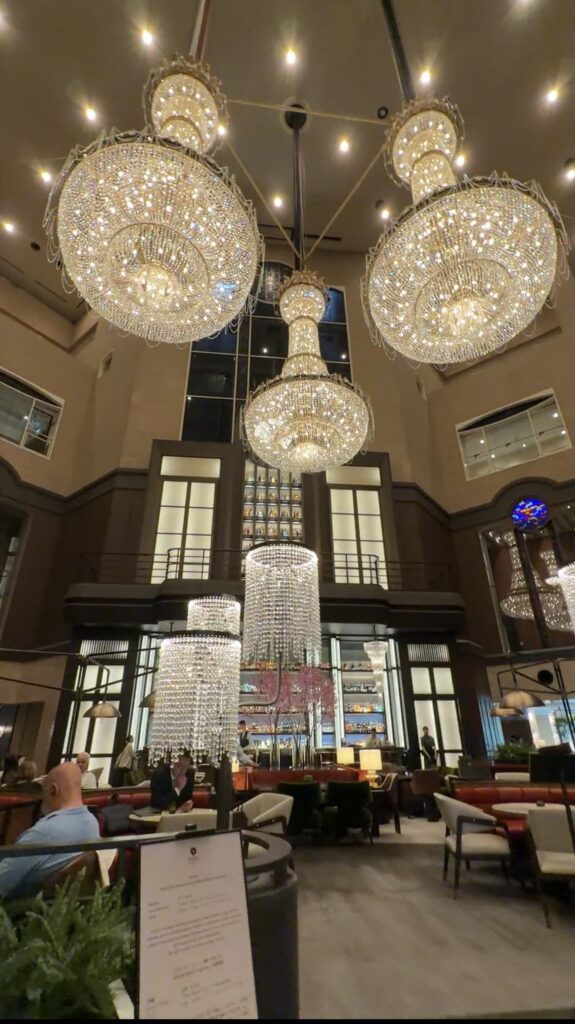
Hyatt Regency Tokyo
To avoid that extra hour of commuting, we moved again, this time to the Hyatt Regency Tokyo. This hotel is gorgeous and had the nicest bathroom of any hotel on our trip. The cash price was $2,020 for our stay, but we paid 58k Hyatt points for two rooms.
Here’s the cards you need to hep you with points.
The Rest of the Day
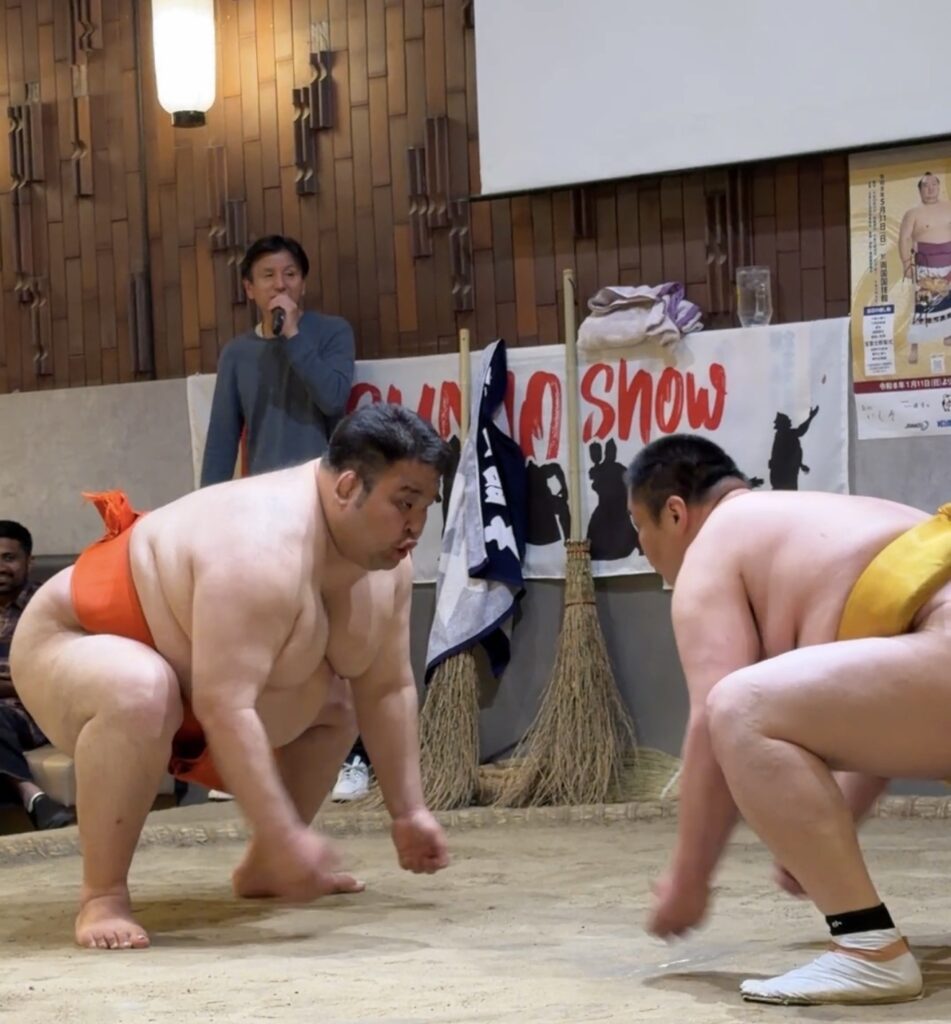
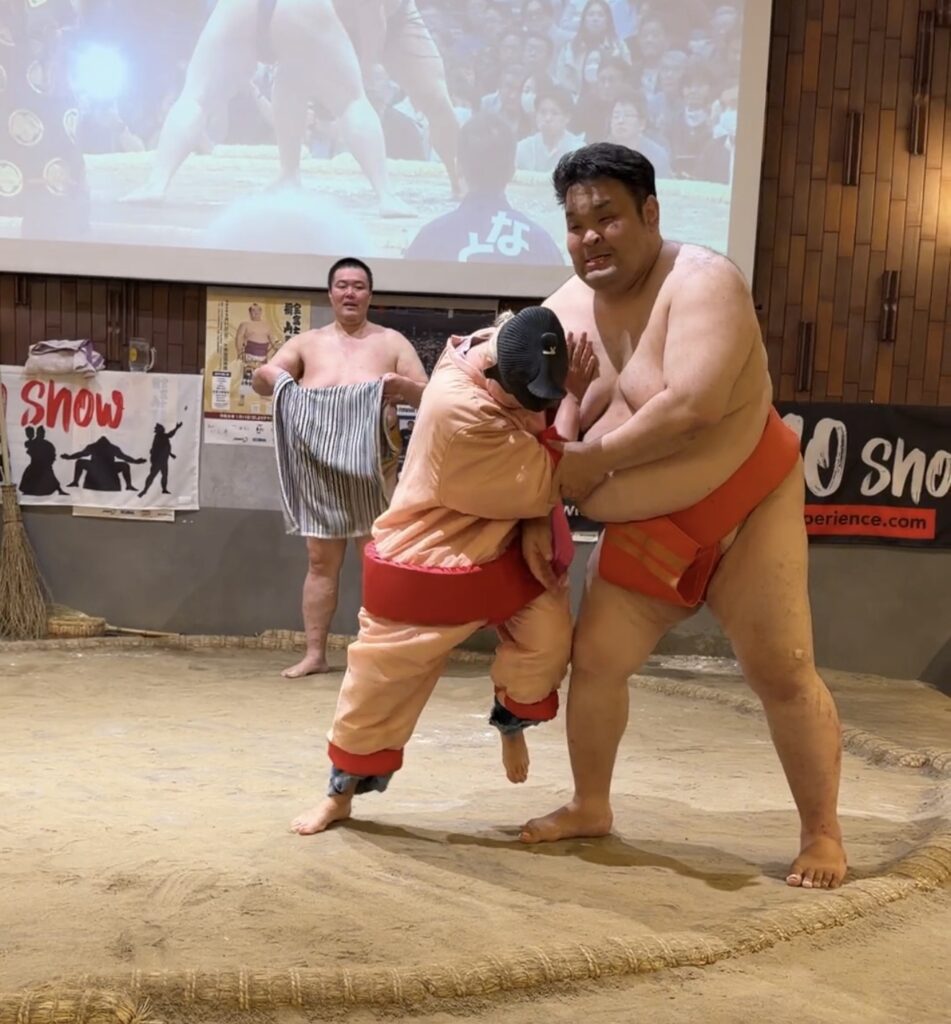
Next up: the sumo show, which was SO much fun. We booked through SumoExperience.com. They offer a dinner option, but we did the show only. Afterward we headed to Mo-Mo Paradise in Shibuya for dinner, which landed in my top five meals of the entire trip. We wrapped the night with a walk to Shinjuku to catch the famous 3D billboard.
Culture Guide
Everything you need to know about sumo
Sumo is Japan’s national sport and has been around for over 1,500 years. It started as a Shinto ritual — a way of entertaining the gods and praying for a good harvest — and evolved into the professional sport it is today while keeping all of its ceremony and tradition intact. It is the only country in the world where sumo is practiced professionally.
The rules are deceptively simple: two wrestlers (rikishi) face off in a sacred clay ring called a dohyo. The first to step outside the ring or touch the ground with anything other than their feet loses. Matches often last just seconds — but the buildup, the rituals, and the atmosphere make it one of the most electric things you can watch in Japan.
Before each match, wrestlers throw salt into the ring to purify it and ward off evil spirits. It’s one of the most iconic images in all of Japanese sports.
There are six divisions, with Yokozuna being the highest rank. A Yokozuna is considered a living embodiment of sumo tradition and is held to an extremely high standard of conduct both in and out of the ring.
There are six grand tournaments (basho) per year, each lasting 15 days. Tokyo hosts three of them — in January, May, and September — at the Ryogoku Kokugikan arena.
If a live tournament doesn’t fit your schedule, sumo experience shows (like the one we booked through SumoExperience.com) are an incredible alternative — interactive, funny, and genuinely fascinating for the whole family.
We almost skipped it. It ended up being one of our favorite things we did in all of Japan. Don’t skip it.
Day 11: Last Full Day in Japan!
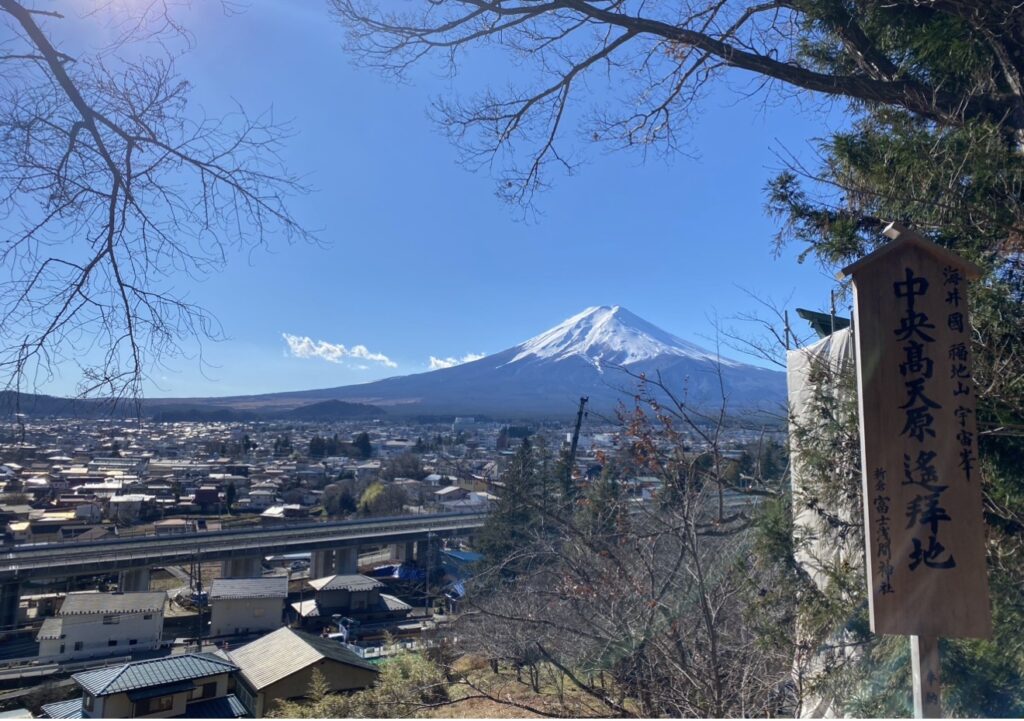
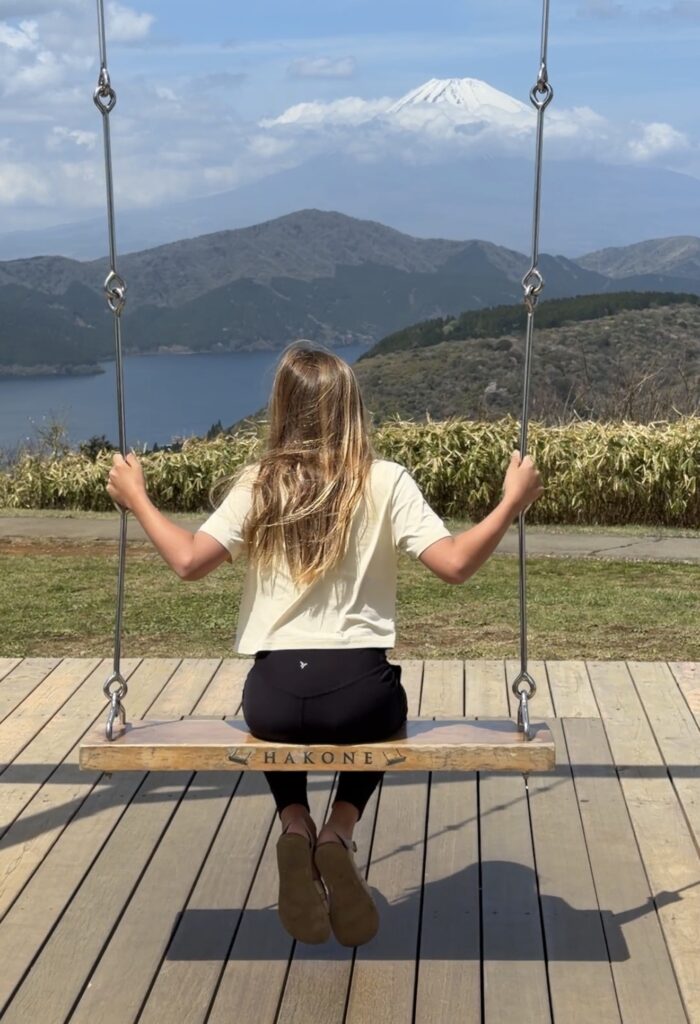
On our last full day in Japan, we still hadn’t seen Mt. Fuji. It’s only clearly visible about 70 days a year, so we were really hoping we’d get lucky, and we did!
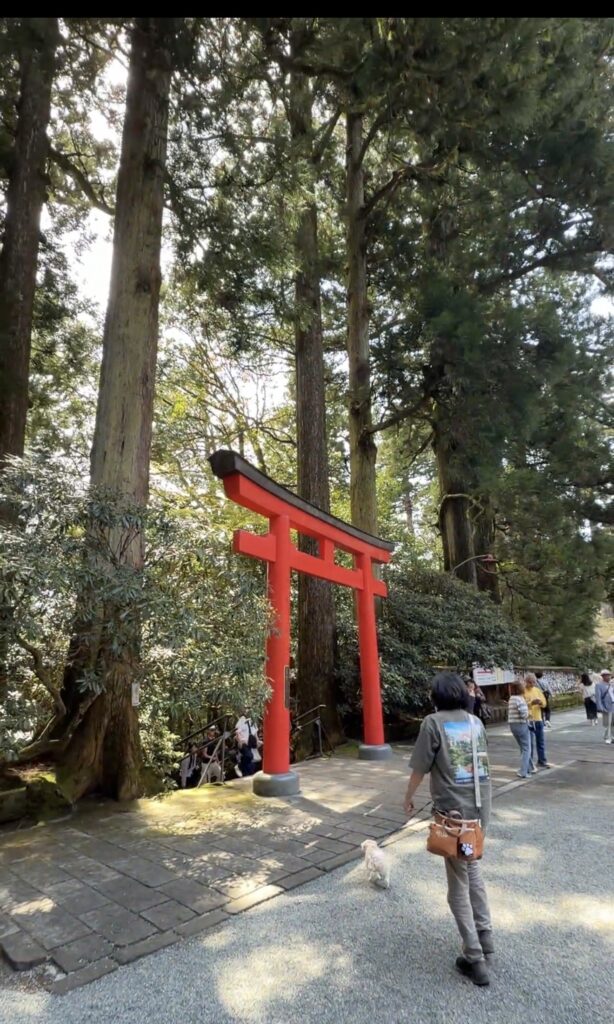
We headed to Lake Ashi in Hakone and booked a tour through GetYourGuide to get off the beaten path. Our guide was fantastic and took us to places we never would have found on our own. Getting out in nature was exactly what we needed after a few packed Disney days.
Culture Guide
Everything you need to know about onsens
An onsen is a traditional Japanese hot spring bath, fed by geothermally heated water from deep underground. Japan sits on volcanic bedrock, which means naturally hot, mineral-rich water is everywhere, and the Japanese have been soaking in it for over a thousand years. The minerals are said to help with everything from skin conditions to stress to sore muscles, and honestly, after a full day of sightseeing, you’ll believe every word of it.
You’ll find onsens at traditional inns called ryokan, at hotels, and as standalone public bathhouses. Some are outdoors (rotemburo), some are indoors, and some are private rooms you can book just for your family. The experience is unlike anything in the Western world, deeply relaxing, deeply cultural, and one of those things you absolutely should not skip.
Public onsens are fully nude, no swimsuits allowed. It sounds intimidating, but everyone says the same thing: the moment you’re in the water, it stops feeling like a big deal. Sexes are separated in public baths. Private onsens (kashikiri-buro) are bookable for families or couples.
You must wash yourself thoroughly at the shower stations before entering the shared bath, sitting on the small provided stool. This is not optional. It’s a strict hygiene rule and a sign of respect for other bathers.
Many public onsens don’t allow tattoos, a tradition rooted in their historical association with organized crime. Attitudes are slowly changing, but check ahead. If you have tattoos, look for tattoo-friendly onsens or book a private bath.
Onsens are peaceful, meditative spaces. Keep voices low, don’t splash, and leave your phone in the locker. No photos in the bathing area.
You’re given a small modesty towel. You can fold it on your head while soaking, but don’t put it in the water. Leave it on the edge of the bath or balanced on your head.
We couldn’t get into a private onsen on our visit. They were fully booked. Book ahead if this is on your list, especially at popular spots in Hakone. It’s one of those experiences we’re going back for.
One stop on the tour was an onsen. All the private ones were booked, and public onsens are fully nude. Our kids probably would have been fine with strangers, but seeing their parents in the buff? Hard pass. We opted for lunch instead.
We even had time for a Don Quijote run. Tourists famously buy an extra suitcase just to fill with Kit Kats, skincare, and beauty products. I hadn’t done any research ahead of time, so I used Instagram as my shopping list. Here’s what I came home with:
Don Quijote haul
What came home in my suitcase
✨ Beauty & Hair
Fino Hair Mask
Honeyque Hair Milk Leave-In Conditioner
D-UP Mascara (Japanese cult favorite)
Kaika Hair Mist (lighter leave-in)
VT Rice Capsule Cream (for dull skin)
Flyaway Stick
Hair Oil (frizz & dry ends)
Hyaluronic Acid Face Mask
Retinol Face Masks
Japanese Nail Clippers (best in the world)
🍬 Snacks & Treats
Peach Fanta
Strawberry Kit Kats
Banana Kit Kats
Melon Soda Candy
Peach Hi-Chews (3 variations)
Sakura Chocolate (strawberry/raspberry/peach — not floral!)
Strawberry Chocolate Mushrooms (gone immediately)
Pro tip: grab an extra suitcase at Don Quijote. You’re going to need it.
At the airport, we visited the Tokyo Centurion Lounge. Made-to-order eggs, onigiri, and Japanese soufflé pancakes. A perfect send-off.
We loved Japan.
Final Thoughts
Japan with kids is absolutely, 100% doable, and one of the most remarkable destinations on earth. The safety, the cleanliness, the food, the efficiency, the cultural experiences, there is nothing quite like it. Between teamLab, the ninja museum, the bullet train, the earthquake simulator, and the ramen class, our kids have been talking about it nonstop.
While I’d love to go back with just my husband and I to experience an onsen, I think Japan is a very family friendly destination.
What We Packed for Japan
Bring a coin purse (Japan runs on coins) and a few trash bags because public trash cans are hard to find. The rest is on my Japan packing list (affiliate link).
I’m always updating my most frequently packed as I try new products, and there are some that have been on there for years. You can find those here (affiliate links).
For more details, read How to Fly to Japan on Points or How to Find Award Flights or Hotels.


VIEW THE COMMENTS