


Affiliate Disclosure: The Rewards Mom may receive a commission from card issuers. Opinions, reviews, analyses & recommendations are the author’s alone, and have not been reviewed, endorsed or approved by any of these entities.
Airline policies and passenger rules are based on the time of this writing.
Our friends’ first flight home from Europe was on time.
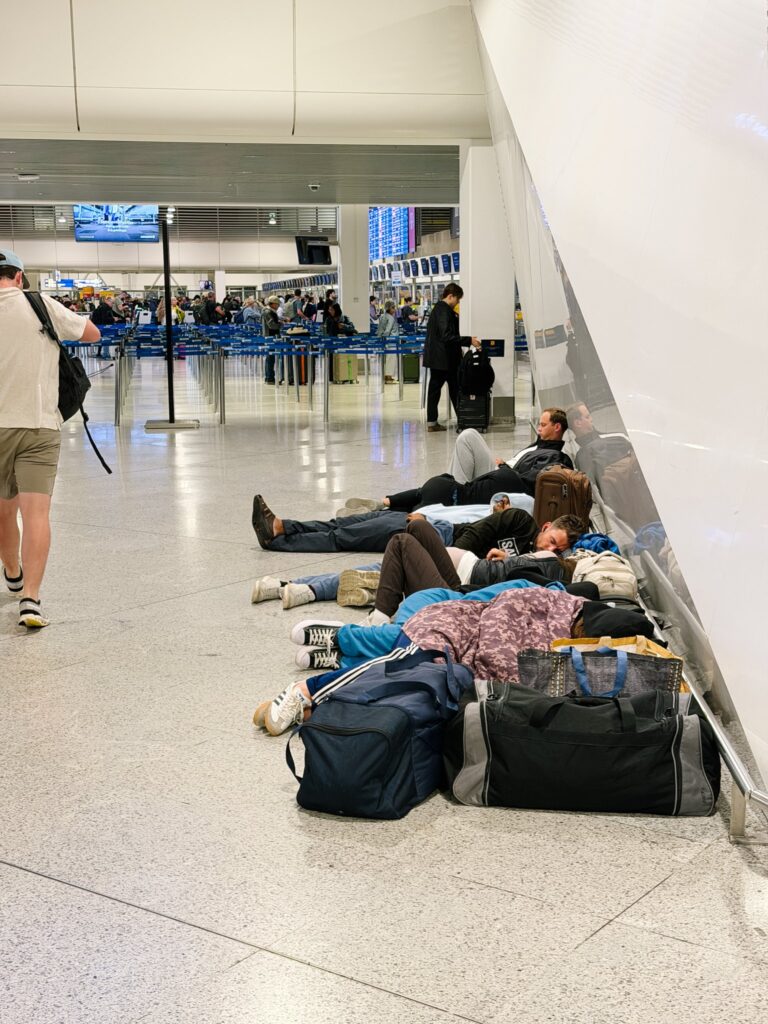
They still got stuck in Paris, paying for their own hotel.
(Stick with me, because why they didn’t get a hotel is the part most people get wrong.)
We’d just finished a trip to Greece and took different routes home:
- Them: through Paris, just over an hour to connect
- Us: through Amsterdam, about the same
We made ours, but just barely.
(Staff checked boarding passes for a short-connection line, and even then, getting across that airport took way longer than you’d think.)
When I shared this on Instagram, my DMs filled up with the same story. So let’s talk about connections in Europe.
Before The Rewards Mom, I was a travel agent and worked for an airline. A connection can meet the airline’s minimum and still be a stressful choice for a family.
Personally, I also don’t think airlines should keep selling connections people consistently can’t make. If it only works when every line is short, give people more time.
If you’re already watching your plane leave without you, here’s what to do next, what happens to your bags, and who pays.
What Do You Do If You Miss a Connecting Flight?
Seven steps. Most take a couple of minutes, and #3 is the one almost nobody does.
1. Find Out if Your Flights Are on One Ticket
Start here. This decides who has to help you.
One ticket (Athens to Paris to home, all on the same booking): the airline sold you the whole trip. If their delay made you miss the next flight, they’ll generally rebook you without charging a new fare.
Separate tickets (Athens to Paris, then Paris to home, booked separately): that’s a self-transfer. The second airline may treat you as a no-show, even though another flight made you late.
Not sure which one you have?
- Two different airlines can still be on one ticket.
- One checkout on a booking website doesn’t always mean your connection is protected.
- Look for “separate tickets” or “self-transfer” on your confirmation, or ask whoever sold it to you. Air France explains the difference here.
2. Check the Airline App
You might already have a new flight. Some airlines rebook you automatically. (KLM says it does this after delays or other unforeseen circumstances.)
Rebooked? Make sure everyone in your group has a confirmed seat. Standby isn’t a seat.
3. Call Customer Service While You Wait in Line
This is the one most people skip.
When a whole plane misses its connections, everyone is going after the same few seats on the next flights. Whoever reaches an agent first gets first pick. A lot of the time, that’s the person on the phone.
So do both at once:
- Stay in line at the desk
- Call the number in the airline’s app or on its website
- Check the app for chat or messaging too
- Go with whichever gets you help first
Booked through a travel agent, a portal, or another airline’s points program? They may need to help with the ticket too.
4. Ask About Other Routes and Partner Airlines
If the agent says nothing’s available, I’d ask:
A few things to know:
- Airlines have rebooking rules and partner agreements, so an agent may need extra help to put you on a flight you found online.
- When EU rerouting rights apply, the rules can require looking at other airlines, even ones outside the same alliance. See a much earlier flight? Ask them to check it or escalate.
- Offered a different airport? Find out how you’ll get home from there, and who pays for that ride, before you agree.
5. Ask Who’s Paying for Tonight
A new flight tomorrow doesn’t tell you where you’re sleeping tonight. Ask directly:
Whether they owe you a hotel depends on why you missed the connection and where you’re flying (more on that below).
If they say no:
- Ask why
- Get the explanation in writing
- You can still submit a claim afterward
Booking your own room and meals? Keep it reasonable and save itemized receipts. (A hotel upgrade and a fancy dinner are a different conversation.)
6. Don’t Like the Answer? Ask for a Supervisor (Nicely)
When I worked for JetBlue as a customer service agent, we were told not to offer a supervisor. Even when we knew a supervisor could do things for someone that we couldn’t.
Be nice, always. Politely asking for a supervisor can make a big difference.
Still not getting anywhere? Try again:
- On the phone: call back and you’ll reach a different agent. They add notes to your reservation, so the next person can see what you already talked about.
- At the airport: a different agent can help too.
7. Confirm the Rest of Your Trip Before You Leave the Desk
Three quick questions:
- Are our other flights still confirmed? Check later connections and your return flight.
- What time do we need to be back? Go by the new check-in and boarding deadlines.
- Are our checked bags going on the new flight? (Bags get their own section next.)
Keep your boarding passes, both itineraries, receipts, and airline messages in one place.
What Happens to Your Checked Bags When You Miss a Connection?
Your bags don’t always stay with you through all this. That part surprises a lot of people.
One Ticket: Your Bags Usually Follow You
Bags on one ticket are tagged to your final destination. When you miss your flight, airlines are usually pretty good (and faster than you’d think) at grabbing your bag and flagging it for your new flight.
Once in a while, a bag still makes the original flight and lands before you do. Not on the carousel? Check the baggage office before you assume it’s lost.
Stuck Overnight? Don’t Count on Getting Your Bags Back
Overnight, your bags usually stay in the airport’s baggage system and go out on your new flight. You can ask for them, but it can take hours, and some airports can’t do it at all.
That’s how people end up at an airport hotel with no pajamas, no toothbrush, and no phone charger.
Flying Home to the U.S.? You’ll Re-Check Your Bags
At your first U.S. airport, you pick up your bags, go through customs, and drop them off again for your domestic flight. That happens even when everything is on one ticket.
(The exception: a few airports, like Dublin, let you clear U.S. customs before you leave.)
Miss your domestic connection after that? The airline moves your re-checked bags to your new flight.
Separate Tickets: You Handle Your Own Bags
With a self-transfer, your bags usually aren’t checked through. You collect them, check in again, and go back through security. (All of that eats into your connection time.)
If you miss that second flight, at least your bags are with you. You’ll still need a new ticket before you can check them again.
Track Your Bags and Report Anything Missing
Ask the agent to confirm your bags moved to your new flight. Many airline apps show where your bag is, but I’d also put an AirTag in every checked bag.
Most of the time, everything’s fine. The one time it isn’t, you can see exactly where your bag is (and show the airline) instead of waiting on an update.
Bag didn’t show up?
- File a report at the baggage office before you leave the airport
- Keep the reference number
- Save receipts for essentials you buy while you wait
Many airlines reimburse reasonable costs while a bag is delayed (and your credit card might too).
What Will Airlines Cover After a Missed Connection?
My airline days taught me to start with one question: what caused the missed connection?
- A delayed first flight
- A long passport-control line
- Getting to the gate after boarding closed
Each one can lead to a different answer about who pays. How you booked and which passenger rules apply matter too.
From there, you’re really asking 3 separate questions:
- Will they rebook you?
- Will they cover your expenses?
- Do they owe you extra cash compensation?
A yes on one doesn’t mean a yes on the others.
Rebooking Your Flight
One ticket + an airline-caused miss = generally a new flight at no extra cost.
What it doesn’t guarantee: room for your whole family on the very next flight. (That’s why step 4 matters.)
A Hotel, Meals, and Transportation
Here’s the difference that matters for a lot of you:
Quick EU notes:
- EU protections can apply when you depart from the EU (like flying home from Greece).
- Flying into the EU from somewhere else? You generally need to be on an EU airline.
- They can apply to tickets booked with miles too.
- Air France and KLM both publish their assistance obligations.
The detail people miss: under EU rules, weather doesn’t automatically get the airline out of providing care. It may get them out of paying cash compensation and still leave the meals and hotel obligation in place. (The EU court has confirmed this.)
Flying a U.S. airline? Check the Department of Transportation’s dashboard. A crew or maintenance problem may trigger benefits a weather delay won’t.
Additional Cash Compensation
Some missed connections qualify for EU compensation when:
- Your flights are on one reservation, and
- You reach your final destination at least 3 hours late
Your route, the delay, and its cause decide it.
The EU passenger-rights guide specifically says missed connections caused by security-check delays or missing boarding time don’t qualify for this compensation.
So a new flight doesn’t automatically mean a payment. And no payment doesn’t automatically mean they didn’t owe you a hotel.
What Will Airlines Not Cover?
A Hotel Just Because Your Connection Was too Tight
This is what happened to our friends.
- They booked the connection the airline sold them.
- Their first flight was on time.
- They missed the next one anyway.
- No hotel.
If your flights ran on time but you couldn’t get through passport control or across the airport before boarding closed, don’t assume you’ll get the same help as after an airline delay.
Being in Europe doesn’t mean every missed connection comes with a free hotel. Ask the airline what reason it recorded and what assistance applies.
That’s a big reason I’d rather book extra connection time than count on the airline to pay if it goes wrong.
A Separately Booked Flight You Missed
With separate tickets, the first airline generally isn’t responsible for replacing your second ticket. A booking service’s guarantee or travel insurance might help, depending on the terms.
Call the second airline as soon as you know you won’t make it. There may be a change or goodwill option.
Every Other Cost From the Disruption
Don’t count on the airline covering:
- Missed tours
- An unused hotel at your destination
- A replacement flight you buy on your own
Those depend on the circumstances, the law that applies, and your insurance.
If the airline owes you rerouting and doesn’t provide it, you may have more rights. Document every attempt to get help before you make your own plans.
Can Your Credit Card or Travel Insurance Help?
Possibly. Check:
- The card you used to pay for the trip (including points bookings where you only paid the taxes with your card)
- Any travel insurance you bought before you left
Two benefits to look for:
- Trip delay reimbursement. Chase’s explanation of the benefit shows how it can cover eligible expenses after certain delays. The reason, how long it lasts, and how you paid all matter.
- Baggage delay coverage. A separate benefit for when your bags don’t arrive with you.
Heads up: a long passport-control line isn’t automatically covered. And “travel protection” doesn’t mean every travel problem qualifies.
Before you file:
- Check your guide to benefits or call the benefits administrator
- Keep the airline’s explanation
- Save your receipts
- Check the claim deadline
How Much Connection Time Would I Allow in Europe?
Airlines use minimum connection times, the shortest connection they’re allowed to sell. IATA explains these are measured between scheduled arrival and departure.
So a connection can meet the minimum and still leave almost no room for a long line or a slow walk across the airport.
My rule of thumb:
- U.S., all on one ticket: an hour is just fine
- Big European airport + passport control: 2 to 3 hours (leaning toward 3 when the options are reasonable)
- Kids, mobility needs, or a terminal change: more
- Separate tickets: more cushion. I’ll absolutely book positioning flights for a better redemption, and my rule for those is 3 hours so one delay doesn’t ruin the rest of the trip.
(That’s my planning preference, not a guarantee.)
Europe is harder because you usually go through border control too. Your connection time has to cover:
- Getting off the first plane
- Passport control and any other required checks
- Getting to the next gate
- Boarding closing before the departure time
Example: Athens to Amsterdam to the U.S. You leave the Schengen travel area in Amsterdam, so you go through passport control there. (Schiphol explains the transfer process here.)
I also dug through Reddit and FlyerTalk:
- One Reddit traveler missed a 75-minute Amsterdam connection because of the passport-control line.
- A FlyerTalk traveler had a 90-minute Paris connection squeezed by an inbound delay of about 20 minutes.
Those are individual stories, so they don’t tell us how often this happens. They do show how fast your cushion can disappear.
Already booked a short connection?
- Check the transfer route ahead of time
- Download the airline app
- Ask staff about assistance
- Amsterdam has a short-connection service, and Air France advertises a Short Connection Pass in Paris (eligibility and the checkpoints covered vary)
Missed Connection
Rebook first
Ask the agent
Keep a paper trail
Points Can Give You Another Option
Stuck paying for a surprise hotel? Points give you another way to book an available room. My hotel-points comparison walks through the major programs.
I love getting the most value out of my points. But if I’m exhausted and need a bed, I’m not going to protect my points balance just because the redemption isn’t impressive. I can earn more points.
When you’re booking international flights with points, give the connection time as much attention as the points price. A good redemption still has to work for your family.
New to points? Grab my free Beginner’s Guide. It’s a quick read that walks you through getting started so you have more options for the trips you actually want to take.
Join Our Community
Want more ideas like this in your inbox every week?
My free newsletter goes out weekly with up-to-date news, offers, and transfer bonuses.
Follow along on Instagram or join our private Facebook group for more travel inspiration.


VIEW THE COMMENTS